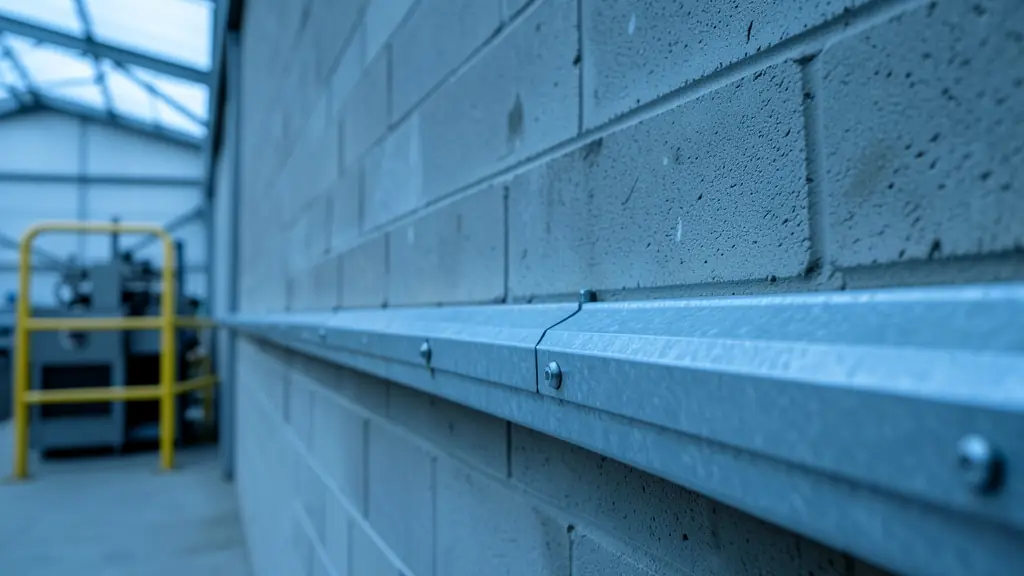
Steel trunking is the metal version of the channel with a lid, made from pre galvanised sheet or powder coated in white, grey or another colour. It is heavier, slower to fit and dearer than PVC, and it earns that where cables need real protection: a factory floor in Rosslyn, a plant room, a mine workshop, a riser in an office block or a passage where a trolley clips the wall every day. Here is where metal trunking makes sense, how it is joined and earthed, and what to watch at the coast.
Where steel is chosen over plastic
- Workshops and warehouses where a forklift, a pallet or a ladder can hit the run.
- Plant rooms, kitchens and areas near hot pipes or welding.
- Risers and main routes carrying many circuits, where a big plastic profile would sag.
- Places where a fire specification or the engineer asks for metal containment.
- Mines and plants where the client simply will not accept plastic.
For light runs in offices and houses, PVC trunking usually does the job at a fraction of the effort.
Lids, couplers and earth continuity
Steel lids either screw down, clip on or hinge along one edge so you can open a long run without removing every screw. Lengths join with couplers bolted inside the base. Because the trunking is metal, it must be bonded to earth by the electrician, and every joint must carry that earth through: copper bonding straps across couplers, bends and lid sections are the usual way. Paint and powder coat insulate, so the contact faces are cleaned or the strap is used regardless. Ask for the straps on the quote, they are easy to forget.
Cutting, deburring and fixing
Steel is cut with a grinder and a thin cutting disc or a hacksaw, then the edge is filed smooth so it cannot strip the insulation off a cable being laid in. Touch the cut with cold galvanising paint. Grommets or edge strip go where cables leave the trunking. The run is heavy, so fixings matter: proper anchors into block or concrete, not plastic plugs in soft brick, and spacing to the supplier's guide. Overhead, steel trunking often sits on brackets or channel like a cable tray.
Rust at the coast and in wet areas
Pre galvanised steel is fine indoors in Johannesburg. In Durban, Gqeberha or along the West Coast salt air works into cut edges and scratches, and a plant with wash down or chemicals is worse. There, ask about hot dip galvanised or powder coated profiles, stainless fixings and sealed cut ends. Outdoors, steel trunking needs a profile meant for it, with a lid that sheds water.
What to put in your request
- Say galvanised, powder coated or hot dip
- Give the sizes and metres for each run
- Mention coastal, wet or chemical areas
- Say screwed, clip on or hinged lid
- Ask for bonding straps and couplers listed
Steel Trunking: who asks for them and why
- Homeowners, landlords and DIY: a garage workshop wall where plastic would crack under knocks from tools and bikes
- Electricians and electrical contractors: metal runs on industrial jobs, with bonding straps counted joint by joint
- Offices, co-working spaces and IT teams: powder coated main routes in a riser or a basement plant room of an office block
- Shops, restaurants, salons and malls: the back of house and kitchen of a restaurant where heat and trolleys meet
- Factories, warehouses, mines and workshops: feeds along factory walls past machines, forklifts and welding bays
- Builders, developers and shopfitters: the specified metal containment on a commercial build signed off by the engineer
- Server rooms, data, CCTV and solar installers: steel routes through a plant area carrying network cables safely to a control room
- Schools, clinics, churches and municipalities: hospital service corridors and municipal pump stations that need robust containment