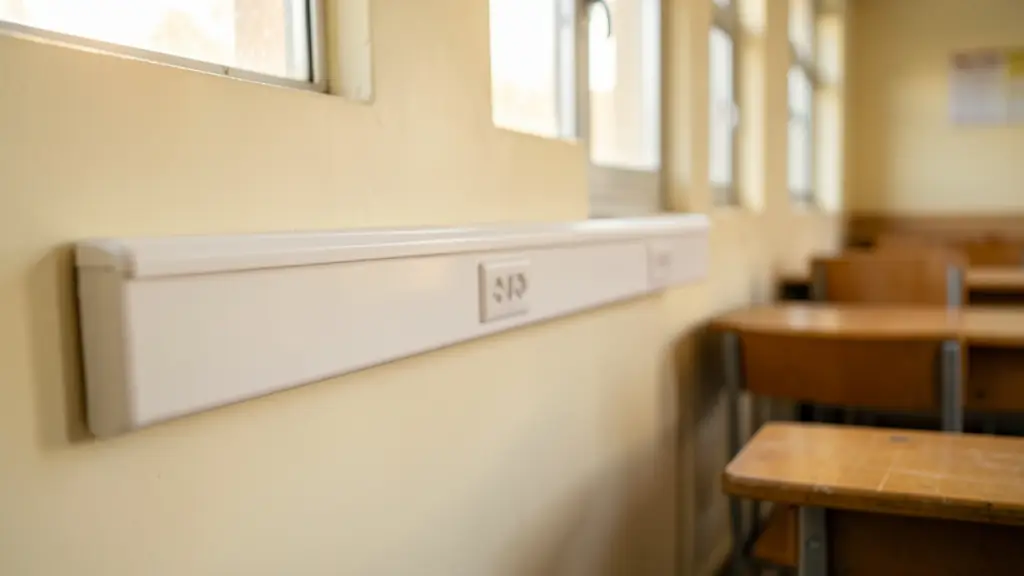
PVC trunking is the plastic channel you see along the walls of classrooms, shops, offices and older houses: a U shaped base fixed flat against the plaster, with a snap fit cover closing over the cables. It is light, quick to cut and, when sold for electrical work, made from self extinguishing PVC that does not keep burning once a flame is taken away. White is the default, black and grey are common, and some ranges come in a wood grain. Here is how to pick it, fix it and keep it straight for years.
Single, divided or multi compartment
A single compartment profile suits one kind of cable. A divided profile has a fixed or clip in barrier so power can run on one side and network or telephone cable on the other, which keeps the two apart as they should be. Three compartment trunking adds a spare channel for later. If you think the room will need data in two years, buy the divided version now: swapping a whole run later costs more than the difference.
Adhesive tape or screws
Small PVC trunking is often sold with peel and stick tape already on its underside. That tape grips clean, smooth, painted plaster in a cool room. It lets go on dusty brick, on a damp wall and in a hot ceiling void or under an iron roof in a Limpopo summer, and the run sags between the corners. Screw it. For a base that stays flat, think of a plug and screw at roughly 500 to 600 mm centres, plus one about 100 to 150 mm from every end and every corner. Use the tape only to hold the length in place while you drill.
Sun, heat and the outside wall
Standard white PVC goes yellow and brittle in strong sun, and after a few summers the lid cracks when you try to open it. Outdoors, on a north facing wall or on a roof, ask for UV stabilised trunking, or use conduit or steel instead. Heat matters inside too: cables packed tight in trunking under a roof run warmer, and the electrician may derate them. Leave space, roughly 45 percent fill is the usual guide, and check it with the fill calculator.
Cutting, painting and fittings
- Saw the base and the lid as two separate pieces, using a mitre box and a fine blade, then clean the burr off with a blade. The cutting guide covers corners.
- To match a coloured wall, wipe the PVC down, key it lightly and paint it with a water based acrylic. Paint the lid off the wall so it does not glue itself shut.
- Buy the angles, tees and end caps from the same range, or the lid will not sit over them.
What to put in your request
- Say white, black, grey or another colour
- Say single, divided or three compartment
- Mention any run outdoors or in a roof
- Give metres and count the corners and ends
- Ask for screws and plugs to suit the wall
PVC Trunking: who asks for them and why
- Homeowners, landlords and DIY: a white run to a new plug in a cottage, painted to match the passage wall
- Electricians and electrical contractors: the everyday channel for rewires and additions, stocked in a few sizes on the bakkie
- Offices, co-working spaces and IT teams: divided profiles along the perimeter carrying plugs on one side and network on the other
- Shops, restaurants, salons and malls: black trunking on a dark shop wall feeding display lights and the till point
- Factories, warehouses, mines and workshops: light duty runs in offices and canteens on a site where the floor area gets steel
- Builders, developers and shopfitters: surface wiring on a fit out where the walls were finished before the electrician arrived
- Server rooms, data, CCTV and solar installers: a dedicated plastic channel for network and alarm cables kept clear of power
- Schools, clinics, churches and municipalities: classrooms, clinic passages and halls wired quickly during the school holidays