
Fundamentals of Cable Trunking Systems
Purpose and Benefits of Enclosed Cable Management
In the shadowed spaces where cables converge, trunking thickness determines more than simple durability. It defines the boundary between order and chaos. Enclosed cable management systems exist to shield, organise, and conceal. In South Africa, where heat and humidity test every material, a proper enclosure prevents deterioration before it begins.
The purpose is straightforward: protect the wiring, grant access when needed, and maintain safety standards. Benefits include:
- Reduced fire risk through contained routing
- Cleaner maintenance access without disturbing adjacent circuits
- Shielding against dust, moisture, and rodent damage
Selecting the correct trunking thickness requires understanding load, environment, and the consequences of failure. A thin channel may hold cables today, but tomorrow it will sag, crack, or expose what should remain hidden.
Common Materials: PVC, Steel, and Aluminium
Material selection dictates how trunking thickness behaves under real-world stress. PVC dominates residential and light commercial installations. It resists corrosion, stays affordable, and tolerates moderate impact. Steel enters where mechanical damage and fire risk run high. Galvanised channels maintain their profile under heavy cable loads and extreme heat. Aluminium sits between the two. It is lightweight, rust-resistant, and simple to cut, yet its softer face demands greater trunking thickness to rival steel’s rigidity.
Each material carries distinct trade-offs:
– PVC suits dry, sheltered environments
– Steel provides maximum protection in industrial zones
– Aluminium balances weight and durability for long vertical runs
Selecting the correct trunking thickness means weighing material strength against the route’s exposure. A thin PVC channel in a factory will fail quickly. A thick steel trough in a ceiling void wastes money and complicates fitting. Matching the material to the environment prevents both outcomes.
How Wall Gauges Vary Across Product Ranges
The metal hides its strength. The same 80mm trunking profile can arrive with a wall of 0.6mm or 1.2mm, and the outer face reveals nothing. That trunking thickness only surfaces later, burdened with the weight of too many cables and a tool hammered against a flange. Manufacturers divide their ranges into tiers to manage cost.
Gauges in mainstream product lines usually follow a pattern:
- Light duty: 0.6mm to 0.8mm, the thin skin that flexes along a ceiling void.
- Standard duty: 1.0mm to 1.25mm, adding rigidity under calm loads.
- Industrial duty: 1.6mm upwards, for abused risers seen near plant floors.
A corridor spec can pass for every supplier only if the same range. The divide appears in the available depth per sku. Two 50mm profiles, one brand, can differ by half a millimetre of bent part steel. That trunking thickness becomes what a procurement sheet never shows. The outer width and depth appear bright in a catalogue, while the gauge waits in small text at the bottom.
Relationship Between Gauge and Trunking Dimensions
Trunking thickness is not a static number; it shifts meaning with each change in profile width or depth. A narrow 20mm channel can carry heavy loads on a 0.8mm wall, but stretch that same gauge across a 100mm tray and the steel begins to deform. I have seen specifiers ignore this pairing, only to watch a broad flange bow under moderate cable loads.
The geometry of trunking dimensions dictates how much material stress concentrates at bends and joints;a thicker gauge compensates for the leverage that longer spans create.
- As width increases, the wall must absorb greater torsional forces during installation.
- Depth adds vertical leverage, demanding extra stiffness in the return flanges.
- Length between supports compounds both effects, turning minor gauge differences into critical choices.
Measuring trunking thickness alone tells you little; you need the dimensions to judge whether that steel will hold. In South Africa, warm ceilings and tight conduit runs amplify these dynamics. Fundamentals start from that relationship.
Measuring and Specifying Material Gauges
Tools Used for Accurate Measurement
Numbers lie, or at least they can when you do not verify them with the right instruments. Measuring trunking thickness is where project failures either begin or end. I have seen a 20 percent discrepancy between a spec sheet and a delivered batch, and only a digital calliper caught it before installation.
The equipment list is small but non-negotiable. You need:
– A digital calliper for direct wall measurement at cut ends
– An ultrasonic thickness gauge for installed or painted runs
– A micrometer for steel and aluminium where sub-millimetre accuracy matters
Choose the tool based on access. A calliper works on exposed edges. Ultrasonic devices read through surface finishes without damaging the material. Each reading gives you the actual trunking thickness, not the theoretical value printed on the packaging. Verify every batch, because spec sheets carry no obligation to tell the truth.
Interpreting Metric and Imperial Values
Interpreting a gauge requires reading it against a known standard. The 1 inch equal to 25.4 mm anchors the imperial system, but South African project specifications often mix both systems in the same document. A 16 gauge value is ambiguous until tied to the appropriate standard, such as SWG or the relevant local table. For steel sheet, this usually equates to a physical trunking thickness of 1.52 mm.
- Ignore generic gauge tables unless the base metal is verified.
- Use the millimetre dimension as the contractual unit for every batch order.
- Recheck the metric deviation against the supplier’s test certificate.
The material composition changes what the number means. A 16 gauge aluminium cable trunk will carry a different millimetre value than a steel version. The actual cross section is the engineering truth, so the imperial label remains a secondary identifier for stock, while trunking thickness governs the installation.
Selecting the Right Gauge for Different Environments
Few things haunt a project like a mismatched specification. In South Africa, a 0.3 mm deviation in trunking thickness can turn a 20 year installation into a 5 year liability! When measuring material gauges, the base metal must be confirmed first. The imperial gauge name remains a stock reference; the millimetre value is the engineering truth.
- Coastal regions: salt fog attacks steel edges. Specify a material thickness of at least 1.5 mm.
- Industrial plants: airborne acids require aluminium or thicker PVC.
- Climate controlled rooms: lighter gauges work if the load spans are verified.
Selecting the right gauge for different environments demands direct observation. For example, the environment dictates the cross section, not preference. The trunking thickness governs structural rigidity and fire resistance. A drawing that lacks the metric unit remains incomplete. The millimetre dimension on the purchase order is the only enforceable specification.
Why Material Gauge Matters for Durability and Safety
Resistance to Impact and Crush Forces
One errant trolley strike can crush a 0.5mm wall in seconds. I have watched that single moment shut down a workshop floor. Trunking thickness separates a minor bump from a costly replacement.
Thicker walls absorb kinetic energy instead of passing it to the conductors inside. When a ladder falls or a pallet nudges the installation, the material’s resistance to impact and crush forces keeps the cables enclosed and operational. Sustained pressure tests the gauge differently. Heavy bundles press against the base; a thin wall bows slowly and creates pinch points that damage insulation.
The trunking thickness changes these outcomes:
- Impact resistance improves as the wall gains material
- Deformation under crush loads reduces with each added millimetre
- Screw retention strengthens because thicker walls offer more thread bite
Every warehouse installation faces its own collisions and stacking hazards. The thickness rating determines whether the first knock is an inconvenience or a shutdown!
Heat Dissipation and Thermal Insulation Properties
A cable’s most persistent threat is the heat it generates. Trunking thickness directly determines how that heat escapes or accumulates inside a confined space. Thin-walled profiles lose heat quickly and support higher continuous loads. Thick-walled profiles retain heat, which can raise conductor temperatures and demand derating. I rarely see specifiers account for this thermal trade-off when they select a system.
Durability follows the same logic. Over time, repeated thermal cycling fatigues thin materials, while thicker walls hold their dimensions and resist long-term sagging. In a fire, additional material slows heat transfer and delays cable failure. The composition matters, but trunking thickness sets the baseline for both safety and service life. It is a structural and thermal specification in one.
The Role of Gauge in Cable Fill Capacity
Ask any electrician in Johannesburg about a trunking thickness, and they will tell you that the flimsiest profiles are a gamble. The gauge determines how much punishment your cable management can take before it warps, cracks, or betrays you entirely. A thicker wall maintains its dimensions under mechanical stress, which keeps cables from shifting against sharp edges. That is how durability directly becomes safety.
Here is where gauge affects your fill calculations. While trunking thickness affects exterior strength, it also steals interior space. Many assume a 50mm trunking always offers 50mm of room, but a heavier gauge shrinks the usable cavity. You might find your cables only fit if you force them, and forcing destroys insulation. A simple checklist helps:
- Check the internal width on the datasheet before buying.
- Allow 20% spare capacity for future cables.
- Confirm your cables bend radius fits without crushing.
Choosing a thicker gauge often means upsizing the trunking itself. That is a small price to pay for a system that does not fail silently. In this country, the sun’s heat and rough installations demand more than paperwork thickness. Let gauge work for you, not against you.
Protection Against Moisture and Chemical Exposure
When trunking thickness drops, the material becomes vulnerable to environmental stressors over time. A thin wall allows moisture to permeate through micro-fractures, especially in South Africa’s high UV and humidity zones. Chemical exposure from industrial cleaning agents or coastal salt air accelerates this degradation. The result is corrosion on metal systems or embrittlement on PVC, which compromises the protective barrier entirely.
Thicker walls resist this ingress because there is simply more material for the elements to penetrate. The trunking thickness directly determines how long the enclosure can hold out against moisture that conducts electricity, corrodes terminals, and weakens insulation.
A practical way to assess protection:
- Inspect the datasheet for actual wall thickness, not the nominal dimension.
- Identify the specific chemicals present in your installation environment.
- Confirm that gasketed joints align properly with the gauge you select.
Moisture that enters a system does not remain passive. It attacks from the inside, and the only defence is a wall thick enough to keep it out from the start.
Implications for Long-Term Structural Integrity
A trunking thickness that looks adequate may fail years before the installation reaches its intended service life. The gauge determines how the system responds to repeated thermal cycling, minor impacts, and building movement. A thin wall flexes under load; over time, the material fatigues at stress points. Cracks appear along corners where the extrusion is thinnest. In South Africa, where temperatures swing dramatically between day and night, this fatigue accelerates.
The safety implications emerge only after a fault occurs. A compromised enclosure no longer contains the arc or the heat of a short circuit. What should have been a controlled pathway becomes a hazard.
What happens with insufficient material:
- Fasteners pull loose from undersized fixing points.
- Lids bow outward under cable weight.
- Joints separate during routine maintenance.
Long-term structural integrity depends on selecting a trunking thickness that matches the physical demands of the route. Thin walls remain a liability for the life of the installation.
How Gauge Affects Fire Resistance and Flame Spread
A cable trunking system can pass inspection and still fail in a Highveld summer. Trunking thickness decides how the enclosure handles daily expansion and contraction. Thicker walls hold fasteners tight and keep lids flat under cable load. Thin sections flex at joints. I have seen joints separate after a few hot seasons. Once gaps appear, containment weakens. The route no longer protects people or property from a fault.
Fire resistance also depends on material gauge. A thicker wall absorbs heat before it deforms. It slows flame spread through the run. Thin metal or PVC can soften, sag, and expose cables during a fire. In South Africa, where ambient heat already stresses installations, the wrong trunking thickness shortens safe evacuation time.
Standards, Testing, and Compliance Considerations
Key Standards Governing Cable Management Products
Standards exist to keep manufacturers honest. In South Africa, SANS 10180 sets the baseline for conduit systems, while international contractors rely on IEC 61084. Both documents include tabulated minimum trunking thickness values for each size category. But a standard is only as effective as its enforcement. Independent testing laboratories measure wall gauge samples using calibrated micrometers, then compare results against the published tolerance. A variance of 0.1 mm can trigger a full batch recall.
- initial type testing
- factory production control audits
- market surveillance sampling
Each step exists to catch deviations from the declared trunking thickness. When a certificate references a specific gauge, the installed product must match that number exactly. I have watched a 0.05 mm discrepancy end a supplier’s contract overnight. Anything less is a hidden liability.
Understanding IP Ratings and Impact Resistance
IP ratings and impact resistance are often treated as afterthoughts, but they should be inseparable from any discussion of trunking thickness. An enclosure with a thin wall may pass a static load test and still fail when struck at a corner. The IK rating, which measures impact energy in joules, is more demanding than many realise.
Consider market surveillance sampling. A batch of trunking with a nominal 1.2 mm wall can drop to 1.1 mm at the bend radius, where stretching thins the material. That subtle reduction in trunking thickness affects both ingress protection and impact resistance. Water may stay out, but a hammer blow the design should have absorbed now transfers directly to the cables.
Testing protocols follow a sequence:
- Mount the enclosure as it would appear on site
- Subject it to probes and water jets
- Run separate impact tests
Every step requires full traceability.
How to Verify Compliance Through Certifications
Third-party certification separates engineered product from guesswork. The difference shows up in the test report, not the sales brochure. In South Africa, that report should come from a SANAS accredited laboratory. Self-declared compliance carries little weight when a specification is challenged.
Certificates lapse. Standards are revised, and products are re-tested. We start by checking that the certificate covers the exact catalogue number in question.
The core checks for verifying compliance through certifications:
- Laboratory accreditation number is listed
- Product family and model match the certificate
- Issue date falls within the validity window
- Test methods correspond to the current SANS edition
A certificate confirms one thing: that a specific trunking thickness met the standard when the test was run. That point-in-time verification is all it promises.
Differences in Requirements Across Regional Markets
Globally, trunking thickness standards are not monolithic. The IEC 61084 series provides a baseline, but local adoption creates significant divergence. South Africa relies on SANS 61084, which includes a specific focus on wall thickness for impact resistance in high-traffic installations. This differs from the harmonized European approach where the EN versions may prioritize different temperature ratings or fire classifications. The regulatory forcing function is often the local wiring code, not just the product standard.
The critical nuance for a specifier is that a product tested in one market may not automatically satisfy the requirements of another. Consider the climatic and installation variables:
– SANS 60364 dictates environmental categories, influencing the required mechanical strength.
– Middle Eastern markets often have stricter UV stabilization requirements for PVC trunking.
– Scandinavian installations frequently mandate higher impact ratings for cold, brittle conditions.
These regional prerequisites change the acceptable minimum trunking thickness for identical application types. A specification that is perfectly compliant in Johannesburg might be insufficient in Doha or Oslo. The compliance certificate must therefore be verified against the SANS edition current in South Africa, not a general IEC claim. The point-in-time verification of a certificate is your only reliable benchmark, but you must ensure that benchmark is the correct one for your geographical context. Standards revision cycles are not synchronized globally, so the validity window becomes a moving target that demands regular reassessment.
Documentation Needed for Project Specifications
When trunking thickness becomes a specification point, the supporting documentation must be precise. A compliance certificate alone rarely tells the full story. The certifying body, the test standard edition, and the date of issue all carry equal weight in the procurement process.
For South African projects, the documentation set should include:
- The SANS 61084 test report showing the actual wall gauge measured
- A letter of conformity tied to the current SANS edition
- Impact test results at the specific temperature rating required
Without these items, a specifier cannot verify that trunking thickness meets the mechanical demands of the installation environment. The documentation must trace back to the exact regional standard, not a generic international claim.
Practical Installation and Procurement Tips
Balancing Cost with Structural Strength
In South Africa, installation crews often face a tradeoff between budget constraints and the structural demands of a project. The trunking thickness you specify influences both the purchase price and the ease of mounting during installation.
When procuring, I compare the declared gauge against the actual requirements of the cable run. Thinner walls reduce material cost, but they can complicate fixing and jointing on uneven surfaces.
Consider these factors during procurement:
- Check the manufacturer’s tolerance range for trunking thickness.
- Request samples to test how the profile flexes under load.
- Verify that the thickness aligns with the support spacing specified by the design.
Balancing these variables early prevents costly rework on site.
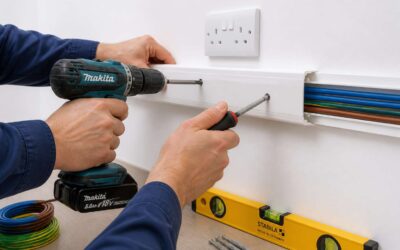
Tools and Techniques for Cutting Heavy-Duty Trunking
Walking a site with a cutting crew in Johannesburg, I noticed how often the success of a heavy duty trunking install depends on the tools in hand, not just the declared specs. A thin wall profile might save a few rand per metre, but it punishes you the moment a grinder snags or a hole saw bites too hard. For trunking thickness above 1.2 mm, a fine toothed blade on a circular saw with a guide rail produces cleaner edges than a jigsaw, which tends to wander and leave burrs that catch cable insulation.
Before you cut, score the profile with a sharp utility knife along the line. This prevents the PVC from cracking under vibration. For steel trunking, use a cold cut saw with a carbide tipped blade and deburr every edge with a file. The offcuts tell you everything. If the material curls or bends during cutting, the trunking thickness is too inconsistent for a professional finish.
- Mark both sides of the trunking, not just the front face, to avoid angled cuts.
- Clamp the profile to a stable workbench before any power tool touches it.
- Use a mitre box for small sections where precision matters more than speed.
Crews in Cape Town often cut on site near the mounting point to avoid transport damage. This works well, but it demands a dedicated blade for each material type. A blade used for aluminium will dull quickly on steel, and the resulting friction can warp the trunking thickness profile at the cut edge. Keep a spare set of blades in the van, and check the actual measured thickness of your delivered stock against the drawings. One workshop I visited found their supplier had shipped 1.0 mm profiles instead of the specified 1.2 mm, and the difference only appeared once they started cutting and the sections kept flexing. Measure every fifth length, at minimum.
Common Pitfalls When Selecting Low-Gauge Options
In Johannesburg, a 10% price saving on low-gauge trunking vanishes when installation time doubles. Braces must be spaced closer and the profile flexes under its own weight. A measured trunking thickness of 0.9 mm instead of 1.2 mm passes a visual check but fails once the lid is loaded with cable.
Procurement teams should verify the trunking thickness on delivery. Measure every fifth length with a micrometer. A Cape Town project received steel profiles that looked identical yet dented at every fixing point because the zinc coating masked a thinner base.
- Check thickness at the edges as well as the centre, since extrusions thin near the sides.
- Reject deliveries that fall below the stated tolerance band.
Low-gauge PVC bows in Durban’s humidity and pulls away from couplers in Gauteng’s dry months. That attention to trunking thickness prevents rework no budget line predicts.

0 Comments