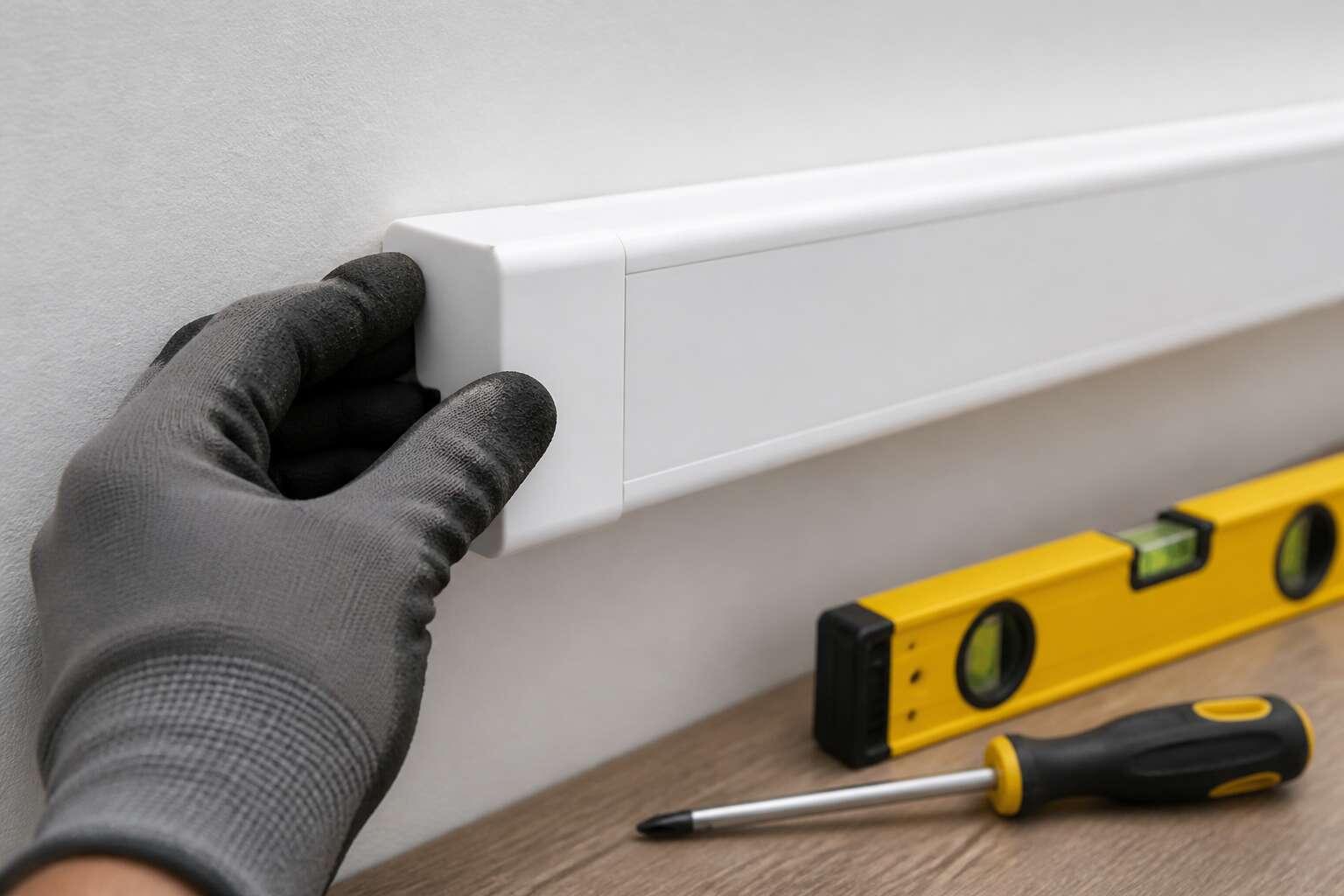
Understanding Cable Trunking Systems and End Cap Functions
Purpose of Trunking in Electrical Installations
Electricity moves through every building along hidden routes, silent until trouble arises. Cable trunking systems organise those routes and guard them from harm. These rectangular enclosures protect wiring against moisture, dust, impact, and pests. For this reason, the trunking end caps builders install are far from decorative. These small fittings close off the exposed termini, keeping debris away and shielding insulation from sharp metal edges.
The purpose of trunking in electrical installations is plain: protect the conductor and make future work manageable. A capped system allows electricians to trace circuits without ripping into walls.
- Isolating wire ends
- Blocking moisture and debris
- Supporting neat wall transitions
- Preventing accidental tugging at joints
Role of End Caps in Protecting Cable Pathways
Anyone who has pulled cable through a steel trunking system knows the smallest gap becomes a hazard. In South African industrial sites, dust and salt air find these openings quickly. That is why trunking end caps builders install are engineered to close every route completely.
These caps also protect the pathway at joints and terminations where vibration loosens connections. Consider what a cap prevents:
- Intrusion of metal shavings during fabrication.
- Tension on cables from accidental hooking.
- Moisture wicking along the conductor.
Understanding the cap function changes how we inspect installations. A cap that clicks cleanly against the trunking profile signals a proper seal. Builders who skip this fitting invite premature wear. I have seen capped systems outlast uncapped ones by years, simply because that tiny plastic shield held firm.
Common Materials Used for End Cap Manufacturing
When I evaluate a cable trunking system, the material composition of every fitting matters. Trunking end caps builders install often receive less scrutiny than the main channel, yet their chemistry dictates performance. A cap that softens or cracks under thermal cycling defeats its protective function.
Common materials include flame-retardant polypropylene, which resists sagging in high heat, and UV-stabilised PVC for outdoor runs. For coastal industrial sites, I prefer nylon caps with glass fibre reinforcement. These handle salt corrosion better than standard plastics. Consider physical properties before choosing:
- Impact resistance against accidental knocks
- Flammability rating to meet SANS standards
- Thermal expansion coefficient matching the trunking profile
Each material behaves differently under load. Steel caps offer strength but create galvanic corrosion risks. Plastic variants isolate electrical paths but require precise tooling. The trunking end caps builders should weigh environmental exposure against mechanical stress, not price.
Compatibility Considerations with Different Trunking Profiles
For an electrician, a trunking cap is either right or wrong; there is no middle ground. Each manufacturer’s channel has its own lip geometry, and a cap that clicks onto one brand may sit loose on another. Trunking end caps builders select must match the exact rail, or the pathway integrity fails where dust and moisture enter.
Compatibility begins with internal width and depth. A cap designed for 20 mm trunking will not stretch to 25 mm without stress fractures. The locking mechanism matters too. Some profiles use friction fit, others a spring clip. The channel material changes the equation since thermal expansion differs between steel and PVC.
For accurate selection, verify three details:
- The manufacturer’s profile reference code.
- The internal dimensions of the channel opening.
- The cap’s fixing method, screw-on or push-fit.
Trunking end caps builders who skip these checks return to site twice.
Choosing the Right End Caps for Construction Projects
Size and Dimension Matching for a Secure Fit
A loose end cap is the quiet failure in many trunking installations. A secure fit begins with exact size and dimension matching, not guesswork.
Trunking end caps builders assume that standard profiles share identical tolerances, but manufacturers vary by fractions of a millimetre. I have measured caps that were 0.4 millimetres too shallow, causing them to pop off during thermal expansion. To avoid this, you need three things:
- the internal width of the trunking channel
- the internal depth from lip to base
- the wall thickness at the lip edge
Each dimension determines how firmly the cap grips. For trunking end caps builders, a cap that fits too loosely defeats its purpose. A cap that fits too tightly risks cracking the profile. Match the cap to the specific trunking brand and series, because even metric sizes differ across suppliers. Then press it home and listen for that solid click. That click is your security.
Material Selection for Long-Term Durability
They say South Africa’s sun can age a man faster than his worries, and the same goes for cheap plastic. I have seen end caps turn brittle and chalky within two seasons of Durban’s subtropical glare. The material you choose today determines whether that cap snaps off in the cold of a Karoo winter or holds its grip for a decade. So, what separates a cap that endures from one that ends up as a brittle shard?
A common misconception is that all PVC behaves the same, but ultraviolet stabilisers are the difference between a robust cap and a decorative piece of waste. For trunking end caps builders, the priority must be on the polymer’s resistance to photodegradation. The harsh African sun breaks down the molecular chains in inferior materials, leaving you with a cap that cracks at the slightest touch.
Consider this when specifying your trunking accessories:
– The hardness rating on the Shore scale, which indicates impact resistance
– The inclusion of titanium dioxide or carbon black for ultraviolet protection
– The fire retardation rating, as many South African building codes are strict
I recall inspecting a warehouse in Johannesburg where the installed caps had gone chalky within eighteen months. The material had failed, not the fit. The owner faced the cost of replacing every single one. For trunking end caps builders, the small premium paid for a high-grade material is a form of insurance against the relentless elements. It is a lesson in foresight, where a solid, well-made cap prevents a return visit and a grumbling client.
Fire Retardant Options for Enhanced Safety
Fire inspections in South African commercial builds fail installations over a single component. The SANS 10177 test measures flame spread across the trunking surface. Fire retardant end caps seal the pathway and slow the movement of flames between compartments.
The SABS 1504 standard governs PVC conduit and trunking. A cap with a V-0 rating stops burning within ten seconds. Builders who ignore this risk failing a fire inspection. Rework costs far exceed a compliant cap’s price!
Consider the specification:
– The oxygen index, which measures the oxygen needed to sustain combustion
– The material’s ability to maintain shape under direct flame
– Whether the cap carries a visible SABS mark
For trunking end caps builders, the difference between pass and fail is often a single component. Fire rated caps hold their seal under heat. An inferior one melts and exposes the cables inside. Trunking end caps builders who skip that verification inherit the risk.
Aesthetic and Finish Choices for Visible Installations
Walk into any commercial build and you will spot them. Those plastic lines running along the walls, quietly holding the cables. Nobody notices trunking until it looks wrong. A cheap, glossy cap that yellows after six months of Highveld sun turns a neat installation into an eyesore. For trunking end caps builders, the visible finish matters as much as the fire rating.
The market offers three practical finishes for exposed runs. Glossy white matches the standard PVC trunking most suppliers stock. Matte finishes suit modern office interiors where glare is an issue. Grey or black caps work in industrial settings where dirt shows less. The choice affects more than looks. A textured cap hides scratches from maintenance work, while a smooth one shows every scuff.
– Glossy white: standard match, low cost, shows age quickly
– Matte: reduces reflection, better for occupied spaces
– Grey or black: practical for factories and warehouses
The fitting quality determines the final impression. A cap that sits flush with the trunking profile looks intentional. One that gaps by two millimetres screams poor workmanship. Builders should check the cap’s edge profile against the actual trunking before installation. Some manufacturers use a slightly rounded edge that sits proud of the surface. Others offer a rebated design that sits level.
Colour consistency across batches matters in large installations. Plastic formulations shift slightly between production runs. A builder who orders caps separately from the trunking may find the white does not quite match. The result is a building that looks finished from a distance but falls apart under scrutiny. Trunking end caps builders who specify caps and trunking from the same supplier avoid this mismatch entirely.
Surface finish also impacts how the caps age. UV stabilisers keep white caps from yellowing, but not all manufacturers use enough. The cheap option fades within a year. The premium version holds its colour for a decade. In a visible installation, that difference is on display every single day. Builders who select on price alone end up returning to fix what a slightly better cap would have prevented.
Balancing Cost and Quality for Budget-Conscious Builders
The silence after a new installation is complete can be deceptive. A project finished on time and under budget feels like a triumph, but the real assessment arrives when the client walks the floor weeks later. That is when the true quality of trunking end caps builders becomes visible. The price paid for a component is always a promise, and the question is whether that promise holds.
The initial cost difference between a durable cap and a fragile one is often small. In the scale of a large tender, that difference might seem insignificant, yet the cost of a failure is always higher. A cap that cracks during installation, or a cover that refuses to seat correctly, demands labour hours to rectify. For budget-conscious builders, the cost of the part is only the first entry on a ledger that includes time, travel, and reputation. The cheapest option often carries the heaviest hidden price.
Here is the practical reality of that trade-off:
1. Confirm the cap’s material has UV protection to prevent early fading and brittleness.
2. Verify the cap’s locking mechanism holds firm after repeated openings.
3. Compare the cap’s wall thickness against the trunking profile itself.
A builder who treats the end cap as a trivial afterthought will find that small decision returning to haunt the final walkthrough. The correct selection, made with foresight, ensures the installation remains a credit to the builder’s name. Choosing a reliable partner for trunking end caps builders protects the project’s bottom line and its long-term appearance, turning a minor component into a statement of inherent care.
Installation Best Practices for Trunking End Caps
Preparing the Trunking Ends for a Clean Connection
The trunking end caps builders rely on will only perform well if the trunking end is prepped correctly. A clean connection starts before the cap ever clicks into place. Rough edges from a hacksaw or a utility knife create gaps where dust and moisture gather. Pass a file along the cut to remove burrs, then wipe the interior with a dry cloth.
Check the profile alignment against the channel. Even a slight twist forces the cap to sit unevenly. When joining sections, keep the ends flush. Use these steps for a reliable fit:
- Use a sharp blade for straight cuts
- Sand the outer lip lightly
- Verify the cap’s seating depth
I always test the fit by pressing the cap on without force. If it resists, trim the edge again. A prepared end makes the final installation neat and dependable!
Securing Caps Firmly to Prevent Accidental Dislodgement
Even a perfectly prepped end will fail if the cap is forced on crooked. In South African roof spaces, heat cycles cause trunking to contract and expand, so a cap that only clicks at two points will work loose within a season. The trunking end caps builders specify for these environments need to be seated evenly across their full width.
Placing the cap over the channel and pressing with the heel of the hand, working from the center outward, lets each locking lug engage in sequence. A cap that sits proud or rocks when touched has not latched properly. A quick check for stray debris or a bent lip is the first remedy. In my experience, loose caps are almost never the product’s fault. They are a sign that installation was rushed.
Sealing Against Dust, Moisture, and Pests
The dry Highveld winters and humid coastal summers create separate threats for electrical trunking. Dust infiltrates through tiny gaps during the dry months, while moisture and pests force their way in when the rains arrive. A cap that seals properly must press against the full perimeter of the channel, not merely at the lugs.
For builders, the field test is simple. Run a fingernail along the seam once the cap is seated. Any catch means the fit is off:
- Check all four corners for even contact
- Look for light gaps between the cap and the channel
- Listen for a solid click as each lug engages
If the end caps have knockouts for cable entry, seal unused ones with the supplied blanks or a thin bead of neutral cure silicone. It keeps spiders and geckos from nesting near live terminals. Trunking end caps builders select for exposed installations should have a continuous gasket or a precision-moulded lip. These details cost little but prevent most dust ingress complaints.
Common Mistakes to Avoid During Installation
Installation is where the quiet failures begin. Even a precisely moulded cap will betray a builder who rushes the final steps. The channel surface must be swept clean, because a single grain of mortar or metal swarf breaks the seal and invites the creeping complaints that surface months later. Angled cuts demand patience; a hacksaw blade that wanders leaves a ragged edge that no cap can truly embrace.
Common mistakes often repeat themselves on site:
– Forcing a cap onto a deformed channel, which creates stress fractures at the lugs
– Using adhesive as a substitute for proper alignment, which traps moisture against the wiring
– Reusing a cap that was removed roughly, as the retention clips lose their bite
The first-person truth is this: a cap seated with deliberate pressure, checked for a uniform seam, rarely needs revisiting. The trunking end caps builders install with care become invisible, which is precisely their purpose. The hurried ones announce their presence with every creak and gap, a constant reminder that shortcuts have a cost. In this trade, the smallest component often carries the heaviest weight of reputation.
Essential Tools and Equipment for Efficient Fitting
In the quiet moments of a site handover, the quality of your work speaks through the simplest details. A client notices the precision of a joint before they ever flip a switch, and that judgment begins with your preparation.
The tools you carry shape that outcome. The essentials are few but non-negotiable:
– A sharp trimming knife for clean, burr free edges
– A spirit level to confirm the channel runs true
– A screwdriver with interchangeable heads, matched to the cap lugs
– A sealant gun for a controlled bead, applied only after alignment is verified
With these in hand, I find that the process becomes almost ceremonial. Score the channel gently before snapping, wipe the surface down, and let the cap seat with a deliberate press. A proper tool setup means fewer adjustments later, and fewer adjustments mean the trunking end caps builders trust will stay exactly where they belong, silent and unseen for years.
Sourcing High-Quality End Caps for Builders and Contractors
Wholesale vs. Retail Purchasing Strategies
In South Africa’s building sector, a single overlooked component can stall an entire electrical installation. The trunking end caps builders select must align with the exact profile dimensions, and sourcing high quality pieces begins with assessing supplier reliability.
Wholesale purchasing suits large developments where bulk orders lower unit costs. Retail buying serves emergency callouts or unique profile requests. Consider these contrasts:
- Wholesale demands upfront capital and storage space.
- Retail offers immediate availability but higher per unit pricing.
For independent contractors, I’ve found a hybrid method often works best. Order common sizes in bulk, then source unusual variants through retail channels. This approach prevents delays without overcommitting funds!
Identifying Reputable Manufacturers and Suppliers
Nearly 30% of electrical callbacks in South Africa trace back to improperly matched components, and the humble end cap is a frequent culprit. For trunking end caps builders rely on, the path to quality begins long before the installation site. It starts with identifying manufacturers who prioritize precise tolerances and consistent material density, not just the lowest tender price.
A reputable supplier will readily provide technical datasheets and profile drawings for trunking end caps. Builders should verify that these documents align with the specific trunking brands they use on site. Look for manufacturers who adhere to SABS standards and who can trace their raw polymer batches. I always request a sample batch before committing to a large order, as this reveals the true colour and rigidity of the material.
When evaluating suppliers, consider these practical checks:
– Confirm the supplier’s stock turnover rate for popular profiles to ensure fresh production runs.
– Ask about their returns policy for batch defects or profile mismatches.
– Review their distribution network for reliable delivery to your project district.
Establishing a direct relationship with a distributor who imports or manufactures for the local market often yields better results than dealing with faceless online marketplaces. These suppliers understand the specific climate and UV exposure demands of the region. Their technical teams can offer insight into which polymer blends hold up best under the African sun, which is invaluable knowledge for any contractor. Your reputation as a professional rests on these small, unglamorous pieces, and the right supplier makes that reputation far easier to protect.
Leveraging Online Marketplaces for Convenience
Online marketplaces make sourcing trunking end caps builders need look deceptively simple. I have ordered caps that appeared perfect in photos, then arrived with tolerances you could measure with a ruler and a sigh. For every reliable seller, there are twenty listing “universal fit” caps that fit nothing at all. That convenience comes with a catch. You must verify everything yourself.
Check the listing for exact dimensions, material density, and UV stabilisers. Look for photos of the actual product, not polished renders. Most importantly, confirm the returns policy before you commit.
My pre-purchase checklist is short:
- Seller location and dispatch time
- Profile compatibility with your trunking brand
- Evidence of SABS testing or traceable batches
Online marketplaces are not useless. They are perfect for urgent deliveries or niche profiles. But for trunking end caps builders rely on, treat every listing like a stranger offering free advice. Polite, plausible, and thoroughly unproven.
Working with Local Electrical Distributors
A courier bag cannot show you how a cap sits on the trunking lip. A local electrical distributor can. I have watched builders learn this the hard way, ordering online and then waiting days for a replacement. The trunking end caps builders trust most are the ones they can hold before buying.
Local distributors carry stock from established manufacturers. They know which profiles the caps match. They can confirm SABS certification and trace batches back to the factory floor. Online sellers cannot do that.
What you get at a counter is certainty.
- Caps that seat flush against the trunking channel
- Wall thickness that matches the manufacturer’s spec
- Stock that is physically on the shelf
For trunking end caps builders rely on daily, a distributor’s counter beats a delivery box every time. The price is fair, the advice is free, and the fit is proven before you pay!
Exploring Custom Fabrication for Specialized Requirements
A builder in Johannesburg once told me that a standard cap is a promise, and a custom cap is a contract. Specialised requirements often begin with an architect’s nostalgia for a discontinued profile. Custom fabrication solves this. A competent fabricator measures the existing channel, assesses the wall thickness, and produces a cap that matches the original curve. Before ordering, ask for a drawing, then a sample. The following checks prevent expensive mismatches:
- Confirm the polymer grade meets your fire rating.
- Compare the lip geometry with the trunking on site.
- Fit one cap before approving the full batch.
For standard runs, trunking end caps builders rely on distributors with physical stock. For bespoke work, the principle is identical: trust nothing until it is in your hand. I have seen contractors accept CAD images and regret it. A South African fabricator who offers design input and short production runs is a rare asset. The conversation at the workshop counter is more reliable than email.
Verifying Environmental and Sustainability Certifications
Certification documents are where the promises end and the evidence begins. When sourcing trunking end caps builders should demand proof, not persuasion. In South Africa, SABS approval is the baseline. Yet the more instructive marks are those tied to material traceability, such as ISO 14001 for production processes or Green Building Council of South Africa recognition for specific product lines.
I have seen certification files that looked official but referenced the wrong polymer grade. The certificate must name the exact compound. Request the test report, not just the summary page. Consider these checks:
– Confirm the certification covers the specific product batch
– Verify the issuing body is accredited by SANAS
– Check whether the documentation addresses recycled content percentages
A supplier who hesitates to share full reports is a red flag. The truth lives in the paperwork, and the paperwork should survive scrutiny.
Safety Standards and Compliance for Trunking Systems
Electrical Safety Regulations Governing Trunking Components
In South Africa, electrical safety regulations have a long memory, and they hold builders accountable for every termination. The SANS 10142 standard governs trunking components, and the end cap is not exempt. A cap that fails flammability testing or impact resistance checks can compromise an entire cable pathway. Trunking end caps builders must confirm that each product carries the correct certification marks before installation.
Municipal inspectors are increasingly thorough. They scrutinise termination points and look for evidence that every component meets the electrical safety regulations. A missing certificate for a small plastic cap raises questions, and rightly so. Stress and heat concentrate at these junctions.
What inspectors typically verify:
– Flammability ratings for all non-metallic parts
– Mechanical strength under normal service conditions
– Manufacturer traceability, including batch numbers
Trunking end caps builders select should arrive on site with documentation in hand. Compliance is not a formality. It is a legal requirement that protects both the installer and the property owner from future liability.
Building Codes and Fire Performance Requirements
Building codes in South Africa treat the cable containment system as a single entity. Fire performance requirements extend to every termination point, including the cap. Trunking end caps builders must verify that each component carries a flame propagation rating aligned with SANS 10400. A cap with weak fire resistance can nullify the protection offered by the trunking itself.
Municipal inspectors increasingly request documentation that traces the material’s fire behaviour. The following checks are common:
- Flame propagation index as per SANS 10142-1
- Smoke density and toxicity readings
- Self-extinguishing behaviour after flame removal
Without these details, the entire trunking system may fail compliance. Trunking end caps builders should treat fire performance as a design requirement, not an optional extra.
Industry Testing Standards for End Caps
Over 60% of municipal electrical inspections flag minor component failures first, and the humble end cap is a frequent culprit. For trunking end caps builders, the compliance landscape is becoming less about guesswork and more about verifiable data. The industry now leans on SANS 10142-1 as the baseline, but the testing doesn’t stop at flame propagation. You must consider the full environmental stress profile of the installation site.
Specific tests that matter to inspectors on the ground include:
– Resistance to UV degradation for outdoor runs.
– Impact strength at low ambient temperatures.
– Dimensional stability under continuous load.
– Dielectric strength of the material.
The paperwork trail is the real beast here. A builder with a van full of caps but no test certificates will find themselves stalled on site. Ensure your supplier provides batch-level documentation, not just a generic brochure. This is the difference between a smooth sign-off and a rework order. Trunking end caps builders who treat this documentation as a core tool of the trade, rather than a bureaucratic nuisance, tend to pass audits with far less friction. The physical product matters, but the proof of its pedigree is what keeps the project moving forward.
Documentation and Traceability for Compliance
In Cape Town, a builder once told me that his end caps passed every physical test but failed the audit because the supplier’s certificate was photocopied beyond legibility. That is how compliance actually works for trunking end caps builders. The physical product matters, but traceability is the deciding factor. Without batch-level documentation, your installation is unproven.
The documentation typically includes three items:
- A certificate of conformance tied to the specific batch number.
- A test report covering UV resistance, impact strength, and dielectric strength.
- A declaration of the material’s flame propagation rating.
These documents must match what is physically delivered. Mismatched serials or missing signatures stall inspections more quickly than any loose cap. Trunking end caps builders who treat the paperwork as part of the build prevent rework orders and project delays.
Inspection Procedures to Ensure Ongoing Safety
Inspection procedures for trunking systems are a cycle, not a single event. A cap that seals cleanly today can loosen after thermal cycling or after maintenance work brushes past it. Trunking end caps builders who design for inspection access make ongoing safety verification simpler.
Routine checks should confirm:
- Caps remain fully seated along the full profile width
- No moisture staining or dust trails around cap edges
- No cracks, warping, or colour shift from UV exposure
Each finding should be recorded against the specific trunking run. This creates a history that supports both safety and liability protection. For trunking end caps builders, the inspection log serves as a practical record and a compliance asset.


0 Comments