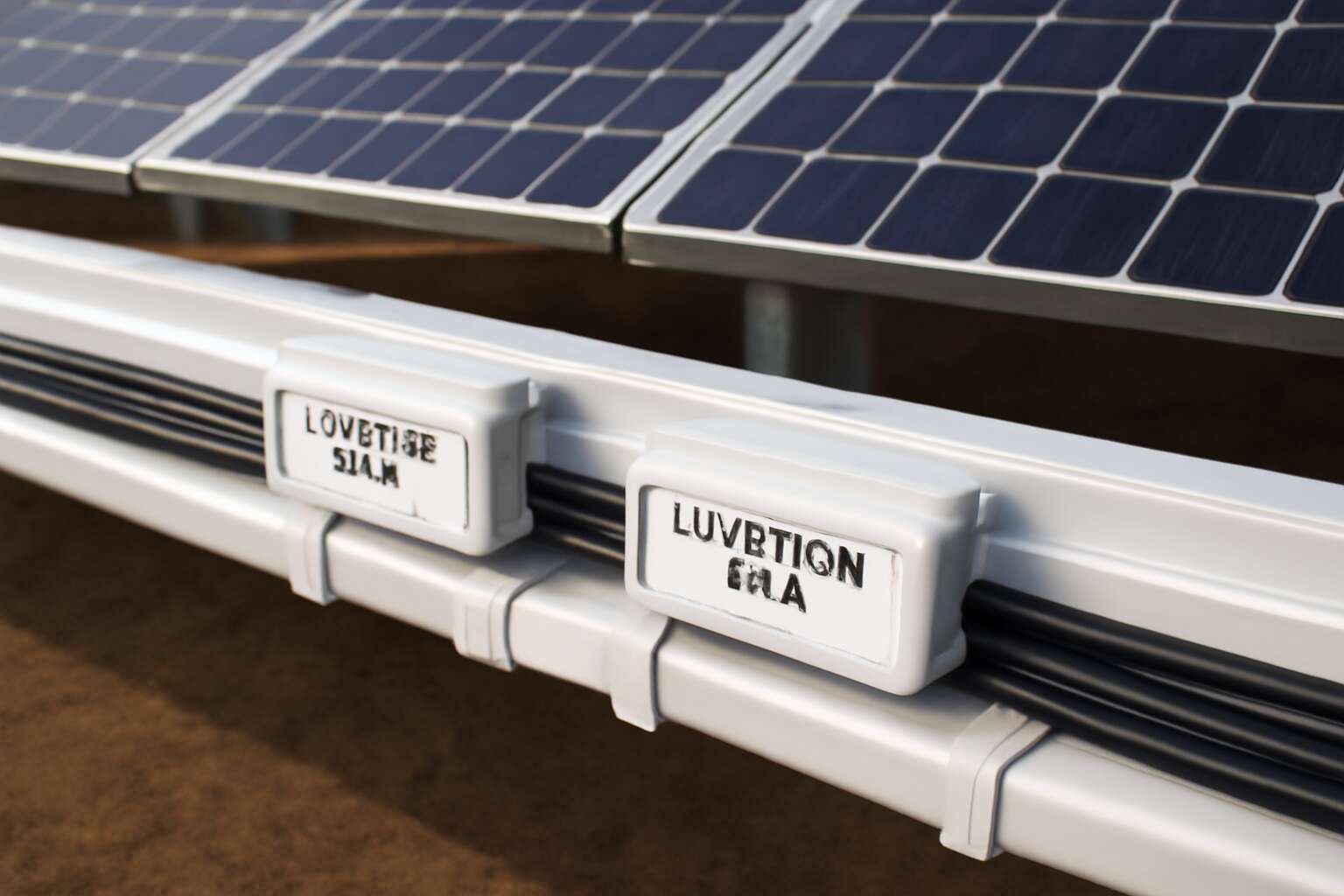
Solar PV Cable Management Fundamentals
Definition and role of cable management in solar installations
South Africa’s rooftops soak up more sun than a Sunday braai, and that’s the easy part. The hard bit is keeping all that energy tidy, or you’ll waste more than bandwidth—perhaps up to 15% of potential output slips through the cracks. Cable management is the disciplined craft of routing, securing, and protecting cables so PV systems stay safe and efficient. pv cable trunking acts as the quiet spine of this operation.
Without it, hot spots breed, moisture invites gremlins, and technicians hunt for cables like tourists in a maze. Good cable management improves airflow, reduces abrasion, and makes inspections painless—no more tangled spaghetti behind the inverter. It’s the difference between a system that hums and one that sighs, and the pv cable trunking that ties it all together.
- Safety-first routing that keeps live parts out of harm’s way
- Thermal management that avoids hot spots and performance drains
- Maintenance access so you aren’t chasing wires like a scavenger
Key components in PV cable management systems
South Africa’s rooftops soak up sun, and a clean feed line makes the difference between a chorus and a hiss. Up to 20% of maintenance time can vanish when cables travel in quiet, orderly paths rather than chaotic walls of wire.
Fundamentals hinge on the right components: robust supports, accessible routing, protective enclosures, and durable insulation. The pv cable trunking serves as the quiet spine, guiding conductors with restraint and respect.
- Cable supports and trays that hold bends true
- pv cable trunking and conduits that shield and organize
- Seals, grommets, and fittings for moisture and UV resistance
Color coding for quick visual checks; clear labeling; and service access so technicians read the heartbeats of the system at a glance.
Benefits of using trunking for solar cabling
Sunlight is a relentless drummer, and the best solar installs march to that beat with a spine that never wobbles. Up to 20% of maintenance time can vanish when cables travel in quiet, orderly paths rather than chaotic walls of wire. pv cable trunking acts as that spine, guiding conductors with restraint and respect, even on South Africa’s exposed rooftops.
The benefits of using pv cable trunking for solar cabling are tangible and enduring.
- Enhanced safety with reduced contact and abrasion
- Moisture and UV resistance with seals and grommets
- Simplified maintenance and faster fault finding
- Neat, scalable layouts that accommodate growth
In practice, the trunking helps technicians read the heartbeat of the system at a glance—color coding, clear labeling, and service access let engineers locate and isolate issues without disturbing the whole roof.
Standards and compliance for cable management in PV projects
Across South African rooftops, standards act as a compass, not a checklist. When PV cabling travels along compliant routes, the system hums with steadiness under sun and storm. pv cable trunking becomes the spine that keeps conductors in line, guarding against moisture, UV bite, and errant wires. In this disciplined choreography, maintenance tasks shrink and uptime rises with each new sunrise.
Key standards and compliance touchpoints include:
- SANS 10142-1 (Electrical installations) as the SA baseline
- IEC 60364 PV series guidance for safe cable routing and wiring in PV systems
- Materials and installation standards for UV resistance, flame retardancy, and weatherproof seals
Standards anchor design to operation, translating blueprint ambition into reliable performance on every roof.
Materials and Sizing for PV Cable Management
Material options: PVC, metal, and composite trunking
A startling 40% of PV failures trace back to cable mismanagement, a quiet horror on the field at dusk. In South Africa’s blistering sun, pv cable trunking becomes more than containment; it is a shield against wind, dust, and creeping heat, a sentinel guarding the lifelines of a solar array.
Material options—PVC, metal, and composite trunking—cast distinct shadows over durability, weight, and cost. The choices shape how long a system endures without murmuring under strain:
- PVC trunking: economical, moisture resistant, and UV-stable for outdoor SA installations.
- Metal trunking: rigid, excellent heat dissipation, and tamper-resistant for exposed sites.
- Composite trunking: light, corrosion-resistant, and forgiving in humid or coastal climates.
Sizing pv cable trunking is a balance of space and breath. Designers weigh fill ratios, conductor counts, bending radii, and temperature ratings, letting the trunking breathe while keeping the heart of the circuit in calm alignment.
Cable sizing, fill capacity, and safety margins
South Africa’s sun forges a relentless heat, and pv cable trunking becomes more than containment—it is a shield that keeps the lifelines of a solar array calm under the glare. A striking 40% of PV failures trace to cable mismanagement, so sizing is not merely math but a quiet vow to reliability. When fills are cramped or margins thin, heat finds a way through. Properly proportioned trunking gives space for dissipation and easy inspection, letting conductors breathe while staying tethered to safety.
Key ingredients influence sizing, fill capacity, and safety margins in pv cable trunking. Factors to consider include:
- Conductor counts and cross-sectional area
- Cable diameter, insulation class, and grouping
- Ambient temperature and expected heat rise
- Minimum bending radii and tray spacing
Balancing these elements yields trunks that endure SA’s climate with confidence.
Installation methods for durability and ease of maintenance
South Africa’s brutal sun doesn’t just demand sun panels; it tests the spine of the installation—the cables. In this climate, materials and sizing of pv cable trunking become a creed: protection that breathes with heat and ages with dignity.
Conductor counts, cross-sectional area, insulation class, ambient temperature, and planned spacing all shape the resilience of pv cable trunking. Proper sizing reduces hot spots, eases inspection, and keeps the system alive when SA’s afternoon glare tests the limits.
To balance durability with maintenance ease, consider these installation-ready features:
- Modular segments for future expansion
- Accessible junction points with clear labeling
- Sealed, gasketed joints to prevent dust ingress
- Color coding and tactile indicators for quick maintenance
A deliberate approach to materials and sizing turns harsh conditions into predictable performance. With pv cable trunking, reliability is woven into every run rather than added later.
Thermal performance, weather resistance, and UV stability
South Africa’s sun—2,700 hours a year—scorches while it powers. In this climate, materials and sizing for pv cable trunking must do more than hold cables; they must dance with heat and endure aging with dignity.
Thermal performance hinges on choosing the right exterior materials and ensuring adequate cross-section to avoid hot spots. Weather resistance and UV stability are non-negotiable; the trunking should shrug off UV rays and abrasive dust. A mindful approach to insulation class and ambient temperature ensures continuous operation.
- Thermally aware cross-sections and ventilation
- UV-stable finishes and color coding
- Dust-tight seals at joints
With quality trunking, maintenance is simpler; the system breathes with heat, ages with dignity. This is how enduring hardware earns its keep in a climate that never forgives vanity.
Layout Design and System Configurations
Routing strategies for string-level and inverter connections
Sunlight becomes strategy when layout design guides the current. In South Africa’s heat, routing for string-level DC runs and inverter feeds through pv cable trunking is a living, guiding choice. The route shapes accessibility, heat dissipation, and fault isolation, so engineers treat it as performance in motion. The right path protects longevity and harvest!
- String-level: parallel runs with uniform bend radii in dedicated trunking lanes.
- Inverter connections: centralised junctions, minimal splices, sheltered through trunking to reduce exposure.
- Modular paths: future expansion via modular compartments that retain clean, scalable routes.
Labeling and accessibility stay aligned with reliability under SA sun, ensuring maintenance is straightforward for pv cable trunking.
Indoor vs outdoor configurations and mounting approaches
Sun-drenched South Africa turns layout design into a performance—where indoor vs outdoor configurations and mounting approaches shape how efficiently the system breathes! When pv cable trunking threads its way through ceilings, racks, or weatherproof enclosures, the route becomes part of the harvest. Indoor layouts favor controlled temps and tidy channels; outdoor setups demand weatherproof trunking and robust supports that shrug off UV and dust.
Consider the transitions between spaces as part of the architecture: a single trunking spine can tie disparate zones together, while modular mounts keep options open without chaos.
- Indoor configurations: clean routes along racking with controlled climate zones.
- Outdoor configurations: UV-stable, weatherproof pv cable trunking with secure mounting.
- Hybrid layouts: transitions at sheltered junctions that maintain continuity without exposing cables to the elements.
In every case, the goal remains a tidy, accessible, and durable trench for the sun’s bounty.
Weatherproofing and sealing to prevent moisture ingress
Sun-scorched SA rooftops remind us that how cables travel matters as much as the panels over them. A thoughtful layout for pv cable trunking keeps routes tidy, speeds maintenance, and nudges overall harvest efficiency toward the sun.
Weatherproofing and sealing are your moisture migrators—stopping ingress from rain, dust, and micro-condensation. Choose UV-stable trunking with IP-rated joints, lock in gasketed connections, fit rugged end caps, and seal penetrations with approved sealant. The result is a continuous shield around the solar spine.
A quick checklist keeps the approach tidy:
- UV stability and weather resistance
- IP-rated protection and gasketed joints
- Sealed penetrations and accessible maintenance points
Segregation of AC and DC circuits and fault isolation
Power routing is a design sport, not a footnote. In SA, a tidy layout can slash maintenance time and cut interruptions—say, 40% fewer headaches when routes are planned rather than ad hoc. Layout design and configurations matter as much as the sun, guiding pv cable trunking across roofs and fields.
Segregating AC and DC circuits isn’t cosmetic; it reduces risk and noise. Use separate runs or compartments, keep inverter feeds away from sensors, and reserve space for fault isolation devices. Clear color-coding and accessible junctions speed diagnostics and curb cascading outages.
- Dedicated pathways for AC and DC with clear separation gaps
- Accessible junctions and service points for rapid fault isolation
- Modular, scalable trays that accommodate future expansion
Implemented thoughtfully, these guardrails translate into smoother operation under the SA sun and fewer surprises during maintenance.
Future-proofing: scalability and modularity
Under the SA sun, future-proofing is a mandate, not a rumor. Layout design and system configurations should feel like a designed horizon, not a crowded alley. The careful choreography of pv cable trunking shapes the rhythm of a solar plant, letting light travel with purpose rather than stumble in the shadows. When routes breathe, maintenance follows with quiet certainty.
Scalability and modularity stand as twin pillars in this craft. Plan for tomorrow, not just today: expandable trays, plug-and-play segments, and future feeders that can be invited without tearing the spine.
- Modular trays for rapid upgrades
- Accessible service points to minimise downtime
- Clear partitioning for future feeders
All this translates into a calmer heartbeat for the plant, a system that endures the glare and the shadows alike. The right configuration reduces risk, streamlines audits, and preserves long-term value for SA’s solar ambitions.
Compliance, Testing, and Lifecycle Management
Electrical codes and industry standards for PV cabling
In South Africa’s sun-drenched installations, compliance is not optional; it’s the quiet guarantee investors trust. Field audits show robust adherence to electrical codes, cutting fault events by up to 30%. pv cable trunking underpins this reliability, guiding cables with discipline through harsh weather.
Testing is not a box-ticking exercise; it’s a rite of passage. Expect insulation resistance tests, continuity checks, and polarity verification. When performed to recognized standards, these tests reveal resilience under load, wind, and humidity, and feed the formal documentation installers rely on.
Lifecycle management keeps performance predictable long after warranty expiry. Establish inspection intervals, log aging, and maintain certificates; a disciplined approach protects the trunking system and the broader PV installation.
- IEC 60364 Electrical Installations
- IEC 62446 Grid-connected PV systems
- SANS 10142-1 Electrical installations (South Africa)
Inspection, testing, and commissioning procedures
South Africa’s solar scene is mighty on sunlight but demands discipline. Field audits show fault events fall by as much as 30% when pv cable trunking guides cabling with quiet certainty through wind and weather.
Compliance isn’t a one-off check; it’s a living standard woven into every hanger, clip, and joint we install. A disciplined approach ensures traceability, proper materials, and clear installation records.
- Regulatory alignment and permit tracking
- Material declarations and labeling
- Record-keeping for maintenance and audits
Testing is a rite of passage, not a box-tick. Insulation resistance, continuity, and polarity checks probe the system under load, wind, and humidity, fueling reliable documentation for installers.
Lifecycle inspection and commissioning keep performance predictable beyond warranties. We schedule intervals, log aging, and renew certificates; pv cable trunking stands as a steadfast guardian of the installation.
Maintenance plans, replacement intervals, and end-of-life considerations
South Africa basks in some of the world’s best solar conditions, yet discipline in wiring is the real differentiator. Field audits show fault events fall by as much as 30% when pv cable trunking guides cabling through wind and weather with quiet certainty.
Compliance isn’t a one-off check; it is a living strand woven into every hanger, clip, and joint. It builds traceability, material integrity, and audit readiness, ensuring that installation records, labels, and declarations keep pace with evolving regulations across the SA grid.
Testing is a rite of passage, not a checkbox. Insulation resistance, continuity, and polarity checks underpin documents that endure beyond warranties. Lifecycle inspection and commissioning keep performance predictable and guide end-of-life considerations for trunking components.
Maintenance plans, replacement intervals, and responsible decommissioning contour the asset’s journey—from cradle to recycling—as pv cable trunking guards the installation through time.
Selecting certified suppliers and quality assurance marks
Compliance is not a one-off checkbox; it is a living strand woven into every hanger and joint on a South African site. When pv cable trunking is chosen with certified suppliers, field audits show fault events fall by as much as 30% through wind, weather, and time. The aim is traceability and material integrity, so installation records, labels, and declarations stay aligned with evolving SA regulations.
Testing is a rite of passage. Insulation resistance, continuity, and polarity checks underpin the documents that endure beyond warranties. Lifecycle inspection and commissioning keep performance predictable and guide end-of-life decisions for trunking components.
Lifecycle management frames the asset’s journey—from cradle to recycling. Selecting certified suppliers and quality assurance marks ensures resilience, accountability, and long-term value for PV installations across the region.
- Certified supplier programs and independent QA marks
- Traceability and material declarations aligned with SA regulations
- Quality certifications and market accreditations that verify consistency

0 Comments