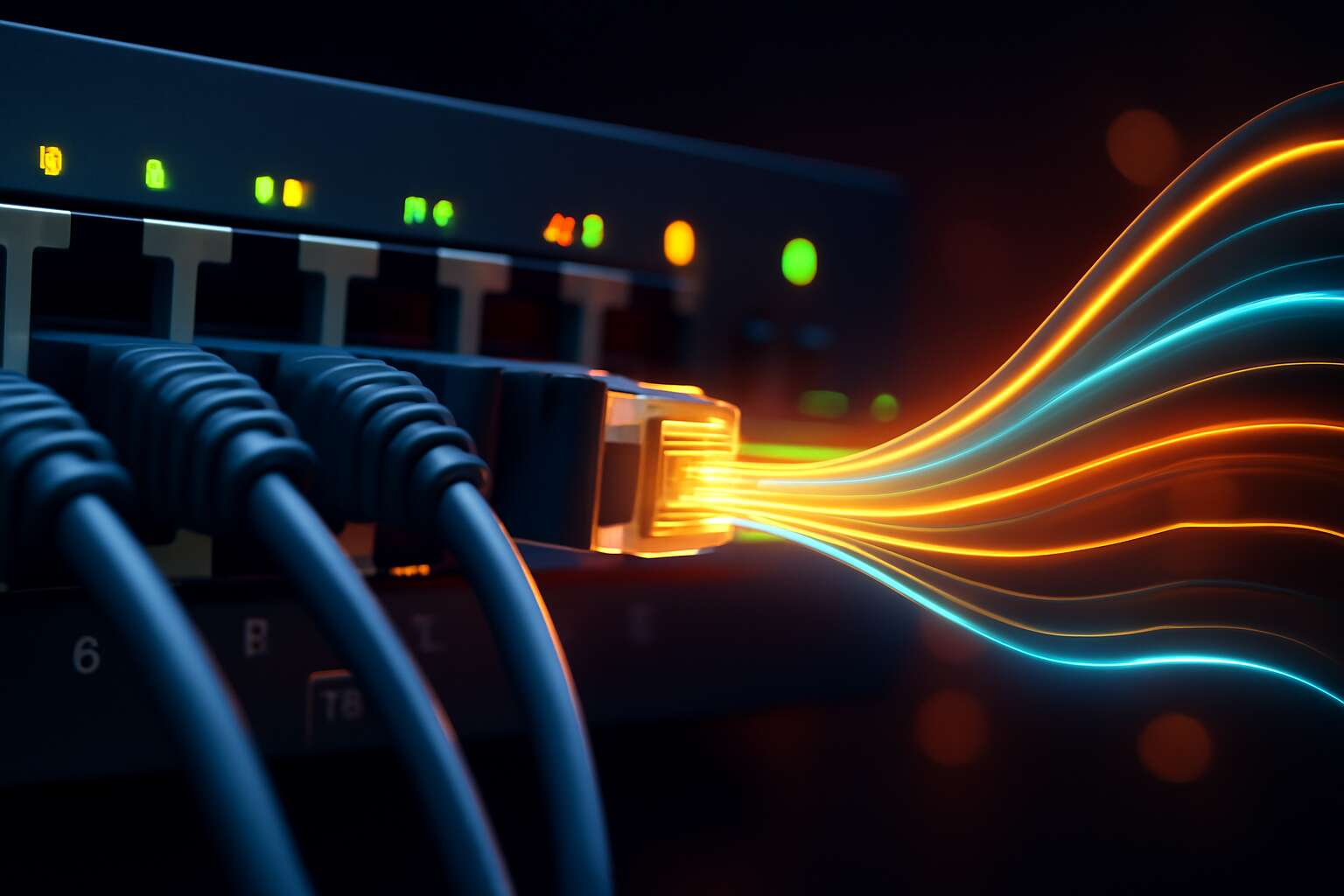
Understanding Network Trunking
Definition of Network Trunking – Explaining what trunking means in a networking context
In the intricate dance of modern networking, understanding what is trunking in networking reveals a core principle of efficiency and scalability. Trunking acts as a vital conduit, merging multiple data streams into a single, cohesive pathway. It’s akin to a highway system, where numerous lanes converge to facilitate faster, more organized traffic flow. This technique is essential for networks that demand high throughput, especially in environments where data must traverse complex infrastructures.
At its essence, network trunking allows different switches and routers to communicate seamlessly by carrying multiple VLANs over a single physical link. This not only conserves ports but also enhances security and traffic management. For those in South Africa navigating expanding digital landscapes, grasping what is trunking in networking can unlock new levels of network design and optimization. Embracing this concept means pushing the boundaries of what your network can achieve—efficient, scalable, and resilient.
Importance of Trunking in Networks – Discussing why trunking is essential for modern networks
In the dynamic landscape of modern networking, the importance of trunking cannot be overstated. As South Africa’s digital infrastructure expands rapidly, understanding what is trunking in networking becomes essential for any business aiming to stay ahead. Trunking acts as the backbone of high-capacity networks, enabling multiple data streams to flow seamlessly over a single physical link. This efficiency is vital as organizations handle increasing volumes of data and require robust, scalable solutions.
Without trunking, networks often face bottlenecks that hinder performance and limit growth. By consolidating VLANs—Virtual Local Area Networks—over one trunked connection, network administrators can optimize port usage and simplify management. This streamlined approach not only conserves hardware resources but also enhances security, making it easier to segment sensitive data. For those navigating the complexities of South Africa’s digital transformation, grasping what is trunking in networking offers a strategic advantage—unlocking faster, more resilient connectivity that keeps pace with tomorrow’s demands.
Types of Trunking Protocols
IEEE 802.1Q VLAN Trunking – Overview of VLAN tagging with 802.1Q
In the vast realm of networking, understanding the nuances of trunking protocols unveils a world of seamless data flow and interconnectedness. When exploring what is trunking in networking, one cannot overlook the pivotal role played by IEEE 802.1Q VLAN trunking—a sophisticated method that transforms simple data pathways into enchanted corridors of VLAN traffic. This protocol acts as a mystical bridge, allowing multiple VLANs to traverse a single physical link while maintaining their distinct identities. It’s akin to a magical portal that channels diverse realms into one unified universe, yet preserves their uniqueness.
At the heart of VLAN tagging lies the 802.1Q standard, which embeds a special identifier within Ethernet frames. This identifier, known as the VLAN tag, ensures that data reaches its designated VLAN destination without confusion. As a result, network administrators can craft intricate, yet orderly, networks that support robust segregation and security. For clarity, consider this simple overview:
- VLAN tags inserted into Ethernet frames to identify traffic belonging to specific VLANs.
- Single physical links carrying traffic for multiple VLANs, simplifying infrastructure complexity.
- Enhanced network segmentation, boosting security and performance.
In essence, understanding how IEEE 802.1Q VLAN trunking works is essential for anyone eager to master the secrets of what is trunking in networking. It’s a cornerstone technology that unlocks the potential for scalable, secure, and efficient network architectures—an absolute necessity in today’s interconnected world, especially across diverse regions like South Africa where network resilience is paramount!
Inter-Switch Link (ISL) – Distinct features of Cisco’s ISL protocol
When exploring the landscape of network trunking, Cisco’s Inter-Switch Link (ISL) protocol stands out as a pioneering method. Unlike the standardized IEEE 802.1Q, ISL is a proprietary protocol that was once widely used in Cisco environments. Its distinct features make it a noteworthy example of what is trunking in networking, especially in legacy systems where seamless VLAN communication is essential.
ISL encapsulates entire Ethernet frames with a header, creating a secure tunnel that carries multiple VLANs across a single physical link. This encapsulation ensures that VLAN traffic remains intact and distinct, safeguarding network segmentation. One of the notable features of ISL is its ability to support up to 1000 VLANs, which provides substantial flexibility for complex network architectures.
Here are some unique features of Cisco’s ISL protocol:
- Proprietary encapsulation method maintaining VLAN separation
- Support for up to 1000 VLANs, enabling detailed segmentation
- Compatibility with various Cisco switches to facilitate network scalability
While newer standards like IEEE 802.1Q have become more prevalent, understanding what is trunking in networking through protocols like ISL offers insight into the evolution of network infrastructure. It highlights how companies tailored solutions to meet the demands of expanding digital ecosystems, especially in regions like South Africa where network resilience and security are paramount.
Other Trunking Methods – Exploring additional trunking protocols and technologies
Beyond Cisco’s ISL, the landscape of network trunking boasts an array of protocols designed to streamline VLAN traffic across switches. These technologies serve as vital links, enabling multiple VLANs to traverse a single physical connection without losing their distinct identities. Understanding what is trunking in networking extends beyond the familiar; it encompasses a variety of methods tailored to different network environments and requirements.
One notable example is IEEE 802.1Q, the most prevalent standard today. It employs VLAN tagging to identify separate VLANs within Ethernet frames, facilitating interoperability between diverse vendor equipment. Meanwhile, other trunking protocols, such as the Transparent Interconnection of Lots of Links (TRILL) and Multiple Spanning Tree Protocol (MSTP), have emerged to address issues like loop prevention and scalability in larger networks.
- 802.1Q VLAN tagging: The industry-standard approach for VLAN trunking, compatible with most network devices.
- TRILL: Designed to improve network resilience and scalability by combining Ethernet and Layer 2 routing.
- MSTP: Allows multiple spanning tree instances, optimizing traffic flow across complex network topologies.
Each of these methods reflects the ongoing evolution of what is trunking in networking, driven by the need for greater flexibility, security, and performance — especially crucial in regions like South Africa, where network infrastructure must adapt to diverse operational demands. As we explore these different trunking methods, it becomes clear that the right protocol can dramatically enhance network efficiency and resilience in an era of relentless digital expansion.
How Trunking Works in Networking
VLAN Tagging and Identification – Process of tagging frames for VLANs
Understanding how trunking works in networking reveals a fascinating layer of complexity that often goes unnoticed. At its core, trunking involves the process of VLAN tagging and identification—an elegant method to ensure data flows seamlessly across multiple virtual networks. When a frame enters a trunk link, it isn’t simply passed along; it is meticulously tagged with VLAN information, allowing the receiving device to recognize which virtual network it belongs to. This tagging acts as a digital signature, guiding data packets through the labyrinth of interconnected switches and routers.
In essence, the process of tagging frames for VLANs transforms a single physical link into a conduit for numerous logical networks. This is achieved through protocols like IEEE 802.1Q, which inserts a VLAN tag into the Ethernet frame header. By doing so, each frame carries the identity of its VLAN, enabling efficient segmentation and security. This tagging process is crucial in large-scale networks, especially when network administrators aim to optimize bandwidth and maintain strict access controls.
Frame Encapsulation and Decapsulation – How frames are packaged and unpackaged across trunks
Understanding how frames are packaged and unpackaged across trunks is essential to grasping what is trunking in networking. When data travels through a trunk link, it doesn’t simply move as a raw Ethernet frame. Instead, it undergoes a process called frame encapsulation, where VLAN tags are inserted into the Ethernet frame header—most commonly through protocols like IEEE 802.1Q. This tagging process acts as a digital signature, indicating which VLAN the frame belongs to.
Once the frame reaches its destination, the reverse process—decapsulation—takes place. The receiving switch or router strips away the VLAN tag, restoring the frame to its original form, ready for delivery within the correct virtual network. This seamless packaging and unpackaging allow multiple VLANs to share a single physical trunk, maximizing bandwidth without sacrificing security or network segmentation.
- The switch adds a VLAN tag to identify the frame’s VLAN during encapsulation.
- The frame travels across the trunk link, carrying VLAN information transparently.
- The receiving device removes the VLAN tag during decapsulation, directing the frame to the appropriate VLAN.
This intricate dance of encapsulation and decapsulation underscores why trunking is so vital in modern networks—making it possible to carry diverse virtual networks over a unified physical infrastructure with remarkable efficiency. Truly, understanding what is trunking in networking sheds light on a foundational process that underpins network scalability and security, especially in complex enterprise environments across South Africa and beyond.
Role of Switches and Routers – How network devices facilitate trunking
In the intricate ballet of data flow, network devices such as switches and routers serve as the maestros, orchestrating a symphony of connectivity. Their role in facilitating trunking is nothing short of transformative, enabling the seamless passage of multiple VLANs over a single physical link. These devices possess the finesse to encapsulate frames with VLAN tags—an invisible signature that guides each packet’s journey across shared pathways. The process is akin to threading a delicate needle through a tapestry, where each VLAN’s identity remains intact amidst the chaos of transmission.
Switches, the stalwart guardians of local networks, employ trunk ports to carry diverse virtual networks with precision. They add the VLAN tags during frame encapsulation, ensuring each piece of data is marked for its destined VLAN. When the frame reaches its destination, the switch meticulously strips away the tag during decapsulation, revealing the original frame ready for delivery within its designated VLAN. This dance of encapsulation and decapsulation not only preserves security but also amplifies network efficiency.
- Identify trunk ports configured on switches.
- Encapsulate frames with VLAN tags during transit.
- Decapsulate frames upon arrival, restoring their original form.
Routers, the navigators of broader networks, interpret these tagged frames, guiding them through complex pathways with finesse. Their role extends beyond mere forwarding; they ensure that each VLAN’s virtual boundaries are respected, even as data traverses the vast expanse of interconnected networks. In this grand architecture, trunking emerges as the vital artery, pulsating with the lifeblood of modern enterprise communication across South Africa and beyond.
Benefits of Implementing Trunking
Enhanced Network Efficiency – Reducing network congestion and improving throughput
Within the intricate dance of data, where information flows like a restless river, implementing trunking in networking emerges as a masterstroke of efficiency. When network traffic surges, congestion threatens to drown the vital signals, but trunking acts as a resilient conduit, channeling multiple VLANs over a single link with seamless finesse. This not only reduces the bottleneck effect but also amplifies throughput, transforming sluggish networks into swift, responsive systems that breathe with vitality.
By consolidating data streams, trunking elevates network performance to new heights, ensuring that every packet arrives with purpose. It’s akin to a conductor orchestrating a symphony—every instrument in harmony, every note in perfect timing. The benefits ripple outward, fostering an environment where data moves unencumbered and efficiency reigns supreme. In the bustling landscape of South African enterprise, where connectivity is the backbone of progress, understanding what is trunking in networking unlocks the door to smarter, more resilient networks.
Simplified Network Management – Centralized VLAN management across multiple switches
In the intricate web of modern enterprise, managing myriad VLANs across multiple switches can often resemble orchestrating a delicate ballet—each element in perfect harmony, yet challenging to oversee. This is where the power of trunking in networking truly shines, transforming chaos into clarity. When you understand what is trunking in networking, you unlock a streamlined approach to centralized VLAN management that simplifies operations and elevates performance.
Implementing trunking allows network administrators to oversee diverse VLANs through a single, resilient link, reducing the complexity often associated with sprawling network architectures. This seamless flow of data not only minimizes administrative overhead but also enhances the consistency of network policies across different switches—ensuring uniformity in security and traffic control. For South African enterprises aiming for agility and resilience, trunking is a vital tool in maintaining a robust, scalable infrastructure.
By consolidating data streams into a unified conduit, trunking fosters a more manageable and efficient network environment. It’s akin to a conductor guiding a symphony—each VLAN’s notes are perfectly synchronized, creating a harmonious and responsive system. This harmony not only simplifies management but also improves overall network reliability, making sure that data packets reach their destination with precision and purpose.
Here are some key advantages of implementing trunking for simplified network management:
- Centralized VLAN control—manage multiple VLANs effortlessly from a single point, reducing configuration errors and administrative burden.
- Enhanced scalability—easily add or modify VLANs without overhauling the entire network structure.
- Streamlined troubleshooting—identify and resolve issues quickly thanks to unified traffic oversight.
For businesses in South Africa seeking to foster connectivity that is both resilient and adaptable, understanding what is trunking in networking offers a pathway to smarter, more resilient infrastructure—one that breathes with the vitality of a well-conducted orchestra and responds with the agility of a seasoned performer.
Scalability and Flexibility – Easily expanding and adapting network segments
In an era where digital transformation is no longer optional but imperative, the ability to grow and adapt network segments seamlessly becomes a strategic advantage. When considering what is trunking in networking, one of its most compelling benefits surfaces: scalability. Trunking empowers organizations to expand their network architecture without the chaos of constant reconfiguration. Instead of creating individual connections for each VLAN, trunking consolidates multiple VLANs into a single, high-capacity link, paving the way for effortless expansion.
This flexibility means that network administrators can add new VLANs or modify existing ones without disrupting the entire system. The process is akin to extending a highway—more lanes, more traffic flow, less congestion. As a result, network growth is no longer hindered by physical or administrative constraints. For enterprises in South Africa striving for agility, this adaptability is not just a convenience but a necessity in today’s fast-paced digital landscape.
- Seamless integration of new segments
- Reduced downtime during upgrades
- Future-proofing infrastructure investments
Furthermore, trunking enhances the overall flexibility of the network, allowing for dynamic reconfiguration in response to evolving business needs. This capacity to modify network topology swiftly ensures that organizations remain resilient and competitive. When you truly understand what is trunking in networking, it becomes clear that its capacity for scalability and adaptability is a cornerstone for building sustainable, forward-thinking network environments—especially vital for South African businesses aiming to thrive in a digital economy that waits for no one.
Common Use Cases for Network Trunking
Large Enterprise Networks – Managing multiple VLANs across extensive infrastructures
In sprawling enterprise networks across South Africa, managing a multitude of VLANs can become a logistical nightmare—unless you understand the power of trunking. This technique, at its core, allows multiple VLANs to traverse a single physical link, streamlining data flow and reducing infrastructure clutter. Imagine a network where switches and routers act as gatekeepers, seamlessly encapsulating and decapsulating frames—this is the essence of what is trunking in networking.
Large organizations often rely on trunking to maintain a cohesive network environment. By establishing a trunk link, they ensure that all VLANs are accessible across different switches without sacrificing security or performance. This not only simplifies network management but also enhances scalability, making it easier to adapt to future growth or technological shifts. In essence, trunking transforms a complex web of switches into a unified, efficient backbone—crucial for managing extensive infrastructures with ease.
- Centralized VLAN management for streamlined control.
- Efficient handling of data traffic, reducing congestion.
- Easy expansion of network segments without overhauling existing infrastructure.
Data Centers – Supporting high-density server and storage networks
In the bustling realm of data centers, where high-density server and storage networks are the backbone of digital operations, efficient data flow is paramount. This is where the concept of trunking in networking becomes a game-changer. By leveraging trunking, data centers can support multiple VLANs over a single physical link, dramatically reducing cabling complexity and optimizing bandwidth utilization. Imagine a scenario where each server farm seamlessly communicates with storage arrays and network switches without bottlenecking—a feat made possible through effective trunking strategies.
One common use case for what is trunking in networking involves creating a resilient, scalable infrastructure that can grow with organizational needs. For instance, data centers often employ trunking to connect different segments of their network, ensuring that high-volume data traffic flows smoothly. This approach not only streamlines management but also enhances security by maintaining VLAN segmentation across various switches. As a result, network administrators can easily monitor, troubleshoot, and expand their systems without disrupting ongoing operations.
Furthermore, trunking facilitates the deployment of advanced network architectures. It enables the integration of multiple switches and routers into a cohesive fabric, which is essential for supporting the rapid deployment of new services and applications. For example, in South Africa’s burgeoning cloud and hosting markets, trunking allows service providers to maintain high-performance environments while minimizing infrastructure overhead. Whether through IEEE 802.1Q VLAN tagging or other trunking methods, the ability to encapsulate and decapsulate frames ensures that data remains organized and accessible across complex network layouts.
Supporting high-density environments, trunking also reduces network congestion by efficiently handling data traffic, thus boosting throughput. As networks become more intricate, the role of trunk links in simplifying management and increasing flexibility becomes increasingly vital. In essence, understanding what is trunking in networking is crucial for designing resilient, scalable, and efficient data center architectures that can meet the demands of tomorrow’s digital landscape.
Campus Networks – Connecting different buildings seamlessly
In the vibrant world of campus networks across South Africa, connecting different buildings seamlessly is a vital challenge. This is where the magic of trunking steps in, transforming what is trunking in networking into a powerful tool for creating resilient, scalable infrastructure. By establishing high-capacity links between switches, trunking allows multiple VLANs to traverse a single physical connection, reducing clutter and boosting efficiency.
Imagine a university or corporate campus where data from various departments—administration, labs, and administrative blocks—needs to flow effortlessly. Using trunking, network administrators can link these segments with a single, robust connection, ensuring high-speed communication without sacrificing security or manageability. This method supports the complex needs of large enterprise networks, making expansion and troubleshooting simpler than ever.
In environments where multiple buildings are intertwined, trunking often employs VLAN tagging, such as IEEE 802.1Q, to keep data streams organized. This technology encases frames with unique identifiers—like digital signatures—so they reach their proper destination without confusion. Whether through trunk links or other protocols, trunking simplifies the intricate dance of data flow across sprawling campus networks.
- Connecting different buildings with a single trunk link
- Supporting high-density VLANs for varied organizational units
- Enhancing overall network resilience and flexibility
By understanding what is trunking in networking, network architects unlock the ability to craft interconnected, high-performance campus environments—an essential ingredient for the digital transformation sweeping through South Africa’s enterprise landscape. It’s not just about connecting buildings; it’s about creating a seamless, dynamic network fabric capable of supporting tomorrow’s innovations.
Challenges and Considerations
Security Risks – Potential vulnerabilities with trunking configurations
While trunking in networking streamlines data flow across multiple switches, it also unveils a shadowy realm of security vulnerabilities. Without proper safeguards, malicious actors can exploit trunking configurations, turning what should be a bridge into a gateway for cyber threats. These potential vulnerabilities often arise from misconfigured VLAN tagging or weak authentication protocols, leaving critical network segments exposed to unauthorized access.
Understanding what is trunking in networking is essential, yet it’s equally crucial to recognize the risks involved. Network administrators must remain vigilant, implementing strict controls and monitoring to prevent data breaches. For example, untrusted devices gaining access to trunk links can lead to VLAN hopping—a technique where attackers bypass network segmentation, gaining access to sensitive information. The challenge lies in balancing efficient network operation with robust security measures.
To mitigate these risks, organizations should consider layered security strategies, such as implementing 802.1X authentication and encrypting trunk links. Regular audits and firmware updates are also vital to patch known vulnerabilities. In the complex landscape of modern networking, understanding what is trunking in networking goes hand-in-hand with safeguarding the entire infrastructure from unseen threats lurking within seemingly innocent trunk configurations.
Configuration Complexities – Ensuring proper setup and management
Configuring trunking in networking may seem straightforward at first glance, but beneath the surface lies a web of complexities that can trip up even seasoned professionals. Ensuring proper setup and management requires meticulous attention to detail and a deep understanding of network architecture. Small missteps—like incorrect VLAN tagging or overlooked configuration parameters—can lead to significant issues down the line, impacting both performance and security.
While trunking streamlines data flow across multiple switches, it demands precision. For example, managing VLAN tags consistently across all devices prevents traffic leakage, but this can become challenging in larger, more dynamic networks. To navigate these challenges, network administrators often rely on structured procedures such as detailed documentation and routine audits. These steps help prevent misconfigurations that could otherwise open doors for potential vulnerabilities or network disruptions.
- Establish clear VLAN tagging protocols.
- Regularly update device firmware to patch known vulnerabilities.
- Implement strict authentication measures for trunk links.
In the complex landscape of modern networking, understanding what is trunking in networking is only part of the equation. Managing its configuration intricacies is equally vital to maintain a resilient, secure, and efficient infrastructure. The key is balancing seamless data transmission with rigorous oversight—because even the smallest oversight can ripple into larger network issues.
Troubleshooting Trunking Issues – Common problems and how to resolve them
In the labyrinth of modern networking, even the tiniest misconfiguration can cause chaos—think of it as the digital equivalent of a traffic jam in the Capetown CBD. Troubleshooting trunking issues often feels like detective work, unraveling why VLAN tags are getting lost in translation or why data isn’t flowing smoothly across switches. Common problems include mismatched VLAN IDs, incorrect trunk modes, or faulty cabling. These glitches can lead to traffic leakage, security vulnerabilities, or network slowdowns that frustrate even the most seasoned network admins.
Fortunately, resolving these issues doesn’t require a crystal ball—just a methodical approach. Start by verifying VLAN tagging consistency; remember, a single mismatched VLAN ID can turn a seamless trunk into a digital traffic bottleneck. Next, check the trunk configuration parameters—are the correct protocols enabled? Are trunk ports set to the right mode? If the problem persists, a quick firmware update or re-establishing the trunk link often does the trick.
- Test with loopback cables
- Inspect port configurations
- Validate VLAN configurations across all devices
By understanding what is trunking in networking and how these components interact, troubleshooting becomes less of a headache and more of a systematic puzzle. After all, in the grand scheme of network architecture, chaos is just an improperly tagged frame waiting to happen. The key lies in meticulous checks, patience, and knowing when to escalate to the next layer of troubleshooting—because, sometimes, even a small misstep can ripple into a network-wide snafu.
Future Trends in Network Trunking
Advancements in Protocols – Emerging standards and improvements
The future of network trunking is poised for rapid evolution. As data demands surge, advancements in protocols are becoming essential for maintaining seamless connectivity. Emerging standards aim to enhance interoperability, security, and scalability—crucial factors in South Africa’s expanding digital landscape. Newer trunking protocols are designed to support higher bandwidths while simplifying configuration complexities. Innovations such as enhanced VLAN tagging and dynamic frame encapsulation are paving the way for more efficient data flow across large enterprise networks and data centers.
One promising development involves the integration of software-defined networking (SDN) with traditional trunking methods. This fusion allows network administrators to control and optimize trunk links dynamically, adapting swiftly to changing demands. Additionally, the rise of multi-protocol label switching (MPLS) and advancements in IEEE 802.1Q standards are set to redefine how VLANs are managed and identified. These improvements will inevitably lead to better network efficiency and simplified management, making it easier to handle expanding network architectures.
- The adoption of next-generation protocols will support higher throughput and reduced latency.
- Standardized security features will mitigate vulnerabilities associated with trunking configurations.
- Flexible, scalable solutions will accommodate the growing needs of large enterprise networks and data centers.
Software-Defined Networking (SDN) – Integrating trunking with SDN architectures
The future of network infrastructure is rapidly evolving, and at the heart of this transformation is the integration of software-defined networking (SDN) with traditional trunking. This combination promises unprecedented control over data flow, especially as networks become more complex and demanding. By harnessing SDN architectures, network administrators can dynamically adjust trunk links, ensuring optimal performance even during peak loads. This adaptability is crucial in South Africa’s expanding digital landscape, where agility can define success.
Emerging trends suggest that SDN-enabled trunking will streamline network management through centralized control points. This innovation not only simplifies configuration but also enhances security by enabling real-time policy enforcement. As networks grow larger and more diverse, the ability to manage multiple VLANs effortlessly becomes invaluable. Network architects are increasingly turning to SDN to unlock scalable, flexible solutions that can adapt swiftly to new challenges and opportunities.
- Implementing automated adjustments based on traffic patterns
- Enhancing security protocols through centralized policy enforcement
- Facilitating seamless integration with existing network infrastructure
Understanding what is trunking in networking is essential in this context. It’s the backbone that holds together these complex, multi-layered environments. As SDN continues to reshape the landscape, the fusion of trunking with software-defined principles offers a glimpse into a more intelligent, responsive future—one where networks can evolve as quickly as the demands placed upon them. The mystery of how these systems will interconnect and adapt remains intriguing, yet undeniably promising for those ready to embrace the next chapter of digital connectivity.
Automation and Management Tools – Modern tools for easier trunking configuration
As digital landscapes expand at an unprecedented rate, the future of network trunking hinges on automation and sophisticated management tools that transcend traditional boundaries. Cutting-edge solutions are emerging to simplify the intricate process of trunking configuration, transforming what was once a complex chore into an intuitive, streamlined task. These modern tools harness intelligent algorithms and centralized dashboards, enabling network administrators to orchestrate multiple trunks with unprecedented ease and precision.
In South Africa’s burgeoning digital economy, the ability to adapt swiftly is not just an advantage—it’s a necessity. As the question of what is trunking in networking remains central to understanding these advancements, it’s clear that the evolution of management tools is reshaping the way networks are built and maintained. Features like automated traffic adjustments, real-time policy enforcement, and seamless integration with existing infrastructure are becoming hallmarks of next-generation trunking solutions.
- Enhanced visualization of network traffic flow
- Automated detection and resolution of trunking issues
- Scalable architectures capable of supporting vast enterprise and data center environments
These innovations promise a future where network trunking is not a static component but a dynamic, intelligent system capable of adapting to changing demands with minimal human intervention. As South Africa’s digital infrastructure continues to evolve, so too does the potential for more resilient, efficient, and secure networks—fuelled by the advanced management tools that redefine what is trunking in networking.




0 Comments