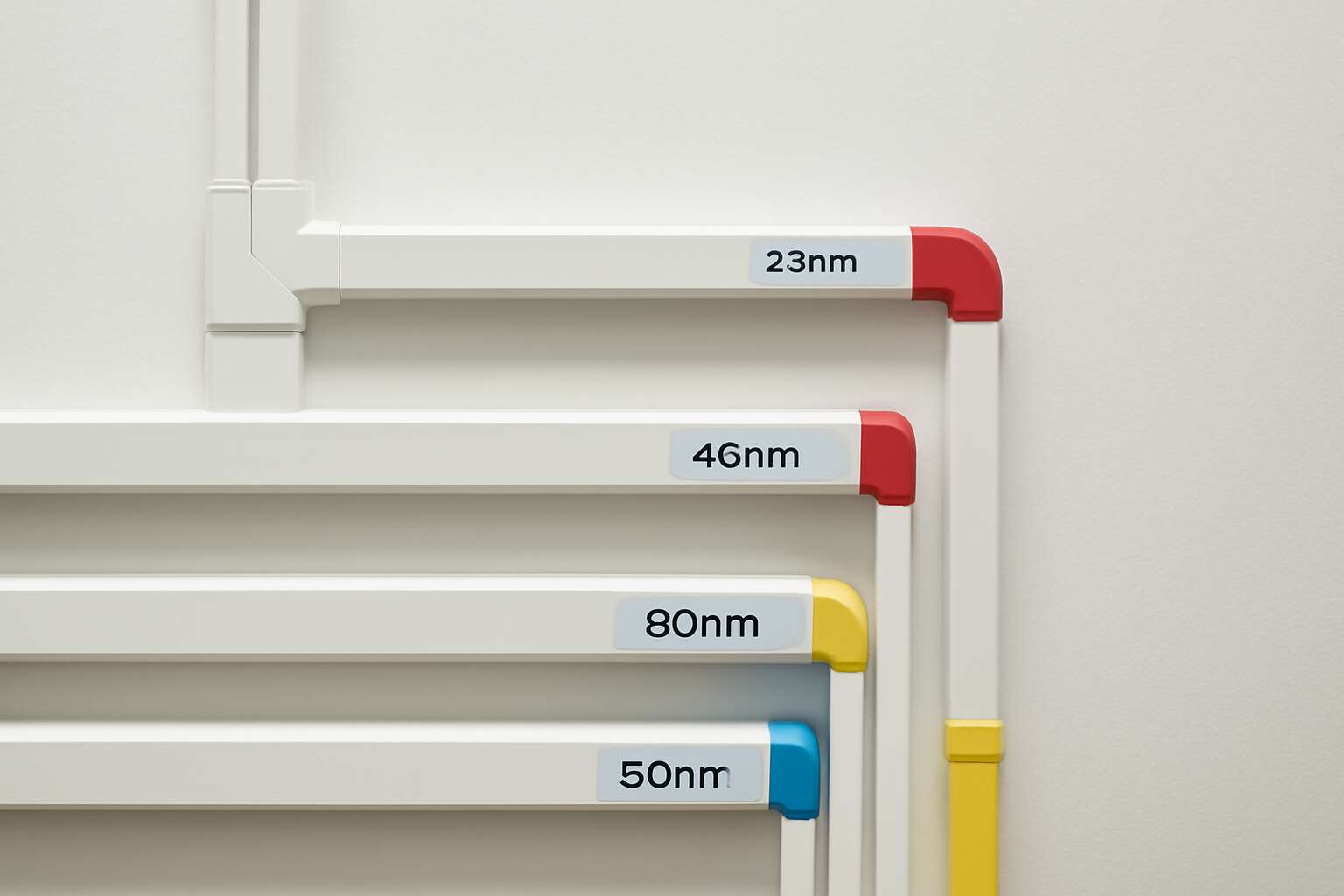
Understanding trunking pipe sizes and standards
Key concepts in trunking pipe sizes
“Size matters,” a veteran SA electrician quips, and it’s never truer than with trunking pipe sizes. When cables crave space, the wrong diameter turns quick installs into clunky puzzles and invites inspections that don’t smile back.
Understanding trunking pipe sizes and standards means tracing nominal vs actual diameters, the wall thickness that governs capacity, and how different materials—PVC, steel, or composites—play with your bend radii and heat tolerance. In South Africa, you’ll align with SANS norms and local by-laws to stay compliant.
- Nominal vs actual diameter
- Wall thickness and load capacity
- Material choices and compatibility
- Standards and local regulations (SANS)
In practice, getting sizing right signals a professional touch—readers can tell the difference between a rushed job and one that respects space, airflow, and safety.
Nominal diameter vs actual bore
Across SA sites, up to a quarter of electrical projects stall because sizing misfits the cables. Understanding trunking pipe sizes starts with a practical truth: nominal vs actual bore determines how much space a bundle of cables really needs. That gap between label and core matters; it shapes effortless installs or clunky rework.
Nominal diameter is the size printed on packaging; it isn’t the actual internal opening. The actual bore is smaller because of wall thickness and manufacturing tolerances. For planning, always read the spec sheet and measure the bore before laying cables. In South Africa, this becomes part of compliance with SANS and local by-laws!
Get the sizing right, because wrong sizing disrupts space and air flow; it signals professionalism. In practical terms, it’s about respecting space, easing pulls, and staying safe.
Common sizing standards and references
Across South Africa, nearly a quarter of electrical installs stall due to mis-sizing trunking pipe sizes.
Common sizing references pull from the national electrical standard and manufacturers’ bore charts. In SA, guidance is anchored in SANS 10142-1 for installations, complemented by local by-laws and contractor guidelines. Always cross-check spec sheets and bore data before committing to a layout.
- SANS 10142-1 (Electrical installations) and amendments
- Manufacturer bore charts and product specifications
- Local municipal by-laws and electrical guidelines
These references keep projects compliant and professional.
How wall thickness and material affect size
Across SA, mis-sizing trunking pipe sizes stalls nearly a quarter of electrical installs, a sobering reminder that small choices have big consequences. Understanding how wall thickness and material affect size helps explain why the same outer dimension can yield different interiors. The inner bore, not the outer girth, determines how many cables you can neatly recess—and that bore is shaped by the metal or polymer used and by its wall thickness.
Materials behave differently. PVC, galvanised steel, and aluminium each carry their own wall thickness for a given outer size, shifting the actual usable space. The result is a practical dance between rigidity, corrosion resistance, and ease of installation. Factors shaping outcomes:
- Wall thickness and its impact on inner bore
- Material type and its bore characteristics
- Environmental conditions and local guidelines
I rely on SANS 10142-1 guidance and bore charts to keep layouts compliant, ensuring trunking pipe sizes stay aligned.
Trunking pipe sizes by material and type
PVC and plastic trunking sizing guidelines
Across South Africa’s bustling offices, trunking decisions shape more than aesthetics. They shape timelines. A recent observation in the trade hints that mis-sized trunking channels contribute to delays as reliably as a coffee break, especially when PVC channels prove too snug for the planned cabling.
PVC trunking serves as the sturdy spine of many installations, but plastic trunking—think ABS or polypropylene—offers lighter handling and different heat tolerance. PVC and plastic trunking pipe sizes guidelines emphasize usable space inside the channel, not merely the outer shell, ensuring cables sit neatly without crowding or fatigue.
Concrete considerations stay in the margins of project specs; here are factors that influence sizing in practice:
- Number and gauge of cables
- Mix of data and power conductors
- Ambient temperature and mounting environment
- Allowances for future expansion
- Installation method and fixings
Metal trunking size ranges and capacity considerations
Metal trunking offers a sturdy spine for busy offices and data centres alike. Steel and aluminium options each bring different strengths: steel trunking is durable, fire resistant, and less prone to deformation; aluminium is lighter and easier to install, with good heat tolerance. Trunking pipe sizes for metal channels aren’t just outer dimensions—they hinge on the inner bore and wall thickness, keeping usable space predictable after fittings.
Metal trunking sizes vary by width and depth, with common commercial ranges from about 50 mm to 200 mm in width and proportionate depths. Capacity depends on the inner bore and how thick the walls are; thicker walls improve rigidity and fire performance but reduce available space. In practice, plan for cable fill and future expansion.
- Fill and mix of data vs power
- Ambient conditions and mounting
- Future-proofing with extra space
Fiber-reinforced and composite trunking size options
Fiber-reinforced and composite trunking size options offer a quiet resilience that suits South Africa’s varied work sites. They blend lighter handling with steady performance, letting teams improvise routes through offices, clinics, and data rooms without the heavy lift of steel. In busy environments, choosing the right profile also means better heat management and fewer mounting challenges.
Here are common options for trunking pipe sizes in this family:
- Glass-fibre reinforced plastic (GFRP) channels provide a predictable inner bore and stable wall thickness for consistent cable fills.
- Carbon fibre reinforced polymer (CFRP) profiles offer high stiffness with slender, easy-to-route forms for tight corridors.
- Aramid-filled composites deliver solid impact resistance and enhanced fire performance without adding excessive weight.
Ultimately, the inner bore and wall thickness define usable space after fittings, shaping both current installations and future expansion plans.
Low-profile and shallow trunking size variations
Trunking pipe sizes carry more than cables; they set the tempo of a site, a quiet drumbeat beneath the bustle. Across South Africa’s varied workspaces, low-profile and shallow forms prove that light handling can share a corridor with steadfast resilience. The right profile tempers heat and eases mounting in tight passages, turning walls into willing partners rather than stubborn obstacles!
- GFRP channels provide a predictable inner bore and stable wall geometry for consistent cable fills.
- CFRP profiles offer high stiffness with slender, easy-to-route forms for tight corridors.
- Aramid-filled composites deliver solid impact resistance and enhanced fire performance without adding excessive weight.
These materials redefine what’s possible in trunking pipe sizes, letting teams imagine routes that grow with demand while preserving neat, accessible present-day installations.
How connectors and fittings influence usable size
Every site runs on a quiet rhythm, and trunking pipe sizes set the tempo. Across South Africa’s workplaces, material and type decide the usable bore—especially once connectors and fittings are added. GFRP channels offer a predictable inner bore; CFRP profiles deliver high stiffness with slender routes; aramid-filled composites bring impact resistance without adding excess weight. These factors redefine what’s possible in trunking pipe sizes, letting routes grow with demand while keeping present-day installations neat and accessible.
Common connectors shape the final space available inside the trunking. They nibble at the bore as cables pass through, so the choice of piece matters just as much as the profile itself.
- Elbows and bends
- Couplings and coupler unions
- T-fittings and cross fittings
- Reducers and end caps
The right mix of material, type, and connector design preserves usable size without sacrificing access or protection, keeping trunking pipe sizes efficient for busy environments.
Calculating appropriate sizes for different installations
Assessment steps for routing length, bends, and fill ratio
Across South Africa, wrong trunking decisions cost more than misordered cables—tasteful, but costly. Size matters, not to win a fashion show, but to keep heat down, access easy, and future upgrades plausible. The trick is treating trunking size as a design parameter, not a guess!
Calculating appropriate sizes for different installations hinges on three pillars. Assessment steps for routing length, bends, and fill ratio keep the narrative sane:
- Routing length: weigh the distance across walls and ceilings, including service points and future routes.
- Bends: count elbows and ensure radii won’t pinch cables or hinder air circulation.
- Fill ratio: estimate how tightly the cables will pack inside the duct under peak load.
With these considerations, trunking pipe sizes steer projects from budget-bloat to efficient pathways; in SA, reliable electrical pathways stay clear as a cape fresh of rain.
Derating factors for heat, ambient conditions, and grouping
In a country where summer heat presses against every wall, the right trunking pipe sizes are more than a fit—they are a pledge of precision. Calculating appropriate sizes for different installations rests on derating factors—heat, ambient conditions, and grouping—that keep the design luminous, not bloated. These choices convert a conduit into a confident design parameter that supports easy access and future upgrades.
- Heat derating: sustained temperatures reduce usable capacity in plastics and metals.
- Ambient conditions: sun exposure, humidity, and altitude alter performance and ventilation needs.
- Grouping effects: how many conductors share a trunking path shapes heat buildup and airflow.
Across South Africa, this philosophy makes trunking pipe sizes a language of resilience, keeping circuits safe and spaces unshowy yet strong.
Using sizing charts and online calculators
“The right trunking pipe sizes sing,” says a veteran electrician, and in South Africa’s furnace-like summers, that harmony saves time and space. Calculating appropriate sizes for different installations unfolds like reading constellations in a warm workshop. Sizing charts and online calculators translate heat, conductor counts, and pathway realities into precise sizes. The result is a design with room to breathe, resilient enough for upgrades yet lean enough to stay elegant.
These tools anchor decisions with tangible references.
- sizing charts
- online calculators
- standard references
In South Africa, this philosophy keeps trunking pipe sizes trustworthy across installations, marrying precision with grace as spaces adapt to modern demands.
Practical tips for accurate trunking size estimation
In South Africa’s furnace-like summers, the right trunking pipe sizes sing and quiet chaos!
A field snapshot across current builds shows that mis-sizing drives rework in a significant slice of projects—often traced to overlooking future loads and pathways when choosing trunking pipe sizes.
Calculations for different installations unfold like constellations in a warm workshop: a tapestry of holistic fit, room for upgrades, and the rhythm of space. The focus is not merely numbers but nuance—designs that breathe, so extensions glide in without drama.
- Future-proofing for evolving circuits without forcing new pathways
- Maintenance access that invites quick checks and gentle service visits
- Architectural alignment, so conduits echo the room’s flow
- Material aging and resilience, allowing for gentle movement over time
These quiet considerations anchor decisions, turning complex routing into a confident, sun-silvered design that stands up to heat and time.
Installation best practices for trunking size selection
Planning layout with future expansion in mind
Across South Africa’s projects, mis-sized trunking costs crews time and budgets. Up to 20% of installation hours can vanish when trunking pipe sizes aren’t nailed down early. Treat them as a strategic ally—get it right, and the rest of the cabling falls into place with surprising grace.
Installation best practices for trunking pipe sizes start with planning layout with future expansion in mind. Map the expected cable load, reserve extra channels, and choose routes that stay accessible for upgrades. Use modular fittings and gentle bends to keep fill ratios manageable and avoid future bottlenecks. Here’s a quick checklist:
- Future-proofing mindset in trunking design
- Consistency in labeling and documentation
- Alignment with local standards and sustainable practices
Adhering to SA standards while keeping a lively, practical approach makes the process smoother. In the end, those sizes aren’t just numbers; they’re the quiet enablers of neat, scalable installations.
Ensuring clearance, ventilation, and accessibility
Trunking pipe sizes are the quiet skeleton of South African cabling—subtle yet decisive. In projects across the country, mis-sized trunking can siphon hours and inflate budgets; a 20% swing in installation time is not rare when the sizes aren’t nailed down early. Treat them as strategic allies, and the cabling falls into place with ease!
Installation best practices for trunking pipe sizes begin with a planning breath that envisions future expansion. Consider the expected cable load, allocate space, and select routes that stay accessible for upgrades. Use modular fittings and gentle bends to keep fill ratios sane, and let labeling guide the journey.
- Clearance for heat management
- Accessible upgrade routes
In the field, trunking pipe sizes are more than numbers; they are the breath and backbone of scalable installations. When honoured, they enable neat, efficient pathways that withstand heat and time, keeping SA projects resilient in diverse environments.
Compliance with electrical codes and safety standards
In South Africa, trunking pipe sizes determine the tempo and safety of every installation. When the numbers align with electrical codes, rework fades and heat stress stays low. I weigh cable fill, keep bends gentle, and verify compatible fittings to ensure a neat, compliant passage through walls and ceilings.
- Compliance with SANS 10142-1 and local amendments, ensuring code requirements are met
- Selection of certified materials matched to the anticipated load and environment
- Clear labeling, measured documentation, and accessible inspection points
Compliance isn’t optional; it’s a governance of risk and a quiet guarantee that every outlet remains safe and accessible for future checks.



0 Comments